Shuixian Temple (Taishexia Community Center) Introduction
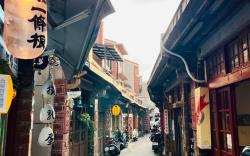
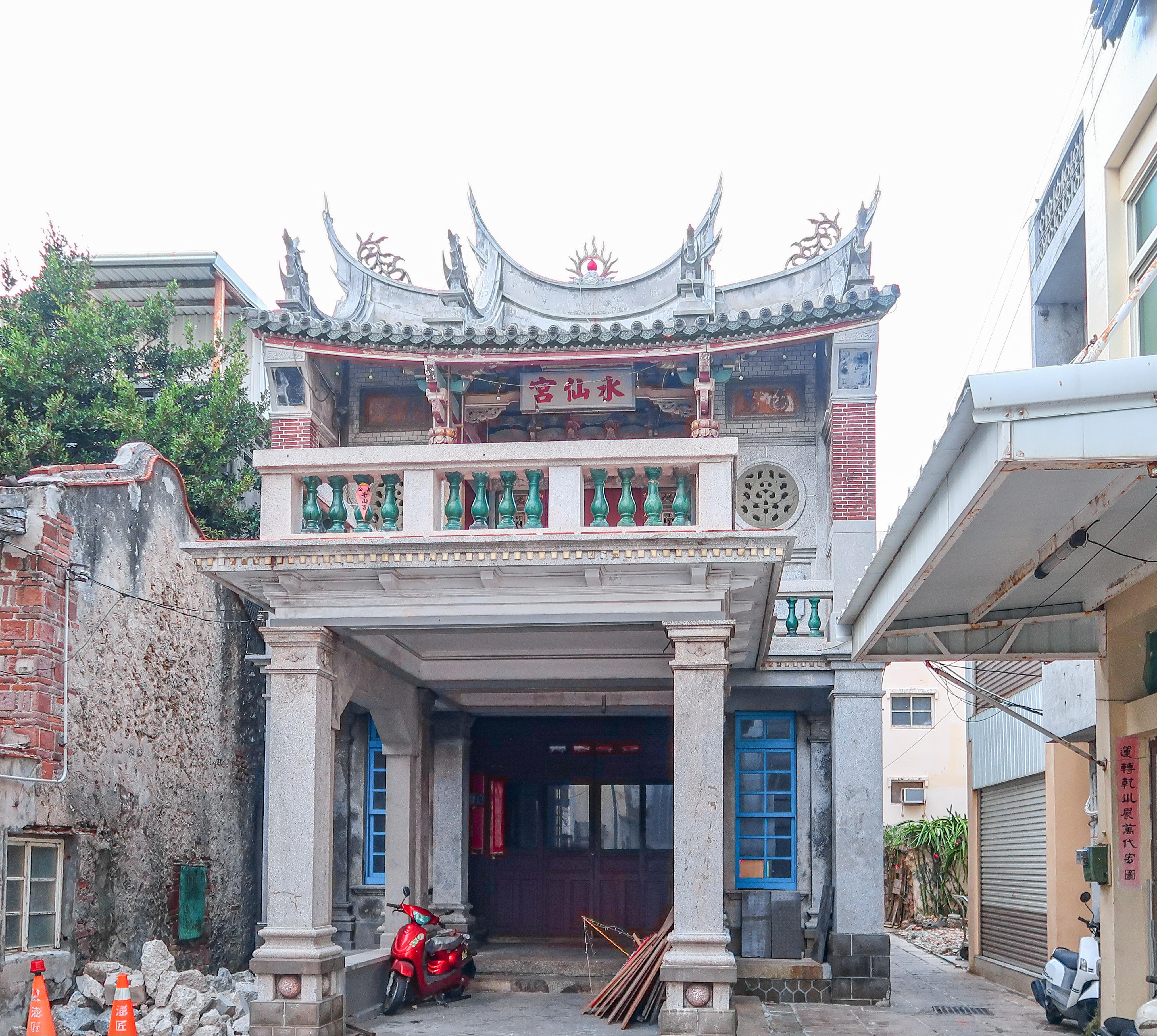
Originally known as Dou Tou Street or Shui Xian Gong Street, this area was one of the most prosperous streets in Magong City. Shui Xian Gong is one of the local centers of faith, but nowadays, most people are more familiar with the Taiwan-Xiamen Guild Hall, which has been using Shui Xian Gong as its hall since 1875. "Guild" refers to the commercial association during the Qing Dynasty, and the Taiwan-Xiamen Guild was a commercial society established by merchants trading between Taiwan, Penghu, and Xiamen in the Qing Dynasty. Shui Xian Gong was originally constructed in 1696 and is one of the four ancient temples in Penghu. During the Japanese occupation in 1900, it was renamed "Taiwan-Xiamen Guild Industrial Hall." In 1929, it was rebuilt into a two-story building with three bays, where the first floor was used for the Taiwan-Xiamen Guild office, and the second floor housed the Shui Xian Gong, dedicated to five deities: Da Yu, Wu Yuan, Qu Yuan, Xiang Yu, and Lu Ban. The overall architecture is a type of street house and is the first two-story temple building in Penghu. The first and second floors are connected by symmetrical wooden staircases, while the eaves of the first floor connect to a pavilion, serving as a transitional space between the inside and outside. Look up: the pavilion’s roof is the courtyard of the second-floor Shui Xian Gong! However, after renovation, the deities of Shui Xian Gong have been relocated to the first floor for worship. You may notice the windows here, which are different from typical temple architecture due to their specially designed European-style sliding windows. The construction also used local Penghu methods of washing seashells to create materials that mimic stone columns and wall surfaces, blending European and local Penghu styles.