Wood-fired Oven Introduction
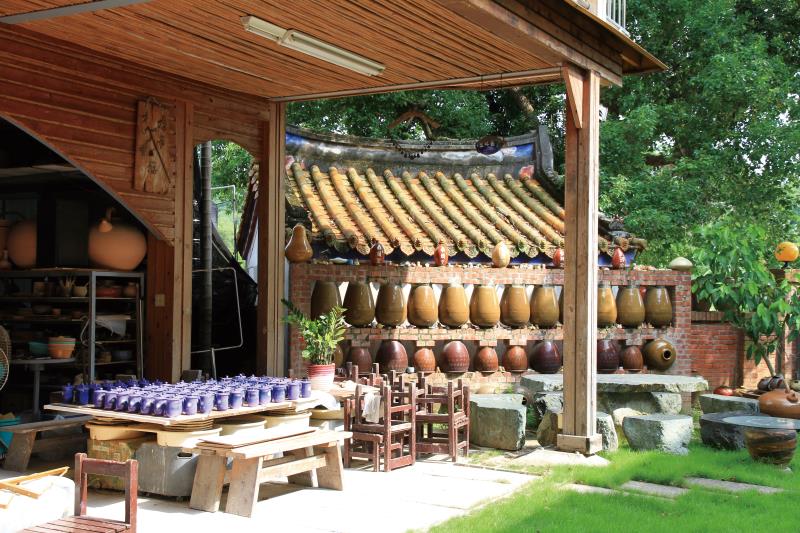
Passing through the tranquil local land temple and circling around the century-old camphor tree and the symbiotic large tree of soft-skinned persimmons, you will find the renowned pottery studio "Mutuo Kiln" in Zhaoqiao. Established for 22 years, Mutuo Kiln is not just a rural pottery workshop; over the years, it has actively promoted pottery cultural education while creating artworks. The owner, Xu Lianbin, has been exposed to pottery since childhood, having learned from masters Chen Huantang, Li Chunxiong, Xu Qixuan, and Cai Junwei, with his ceramic works winning accolades in numerous competitions. To help the public gain a deeper understanding of the "beauty of pottery," Mutuo Kiln has planned hand-building and pottery classes, allowing visitors to enjoy the fun of working with clay through hands-on experience. Additionally, the second-floor "Art Exhibition Hall" showcases many intricately crafted pottery creations, including tea sets, vases, jars, bottles, and plates, especially notable for their creative glazes that amaze visitors. Mutuo Kiln customizes exquisite crystalline glazes and flowing glaze pottery gifts tailored for organizations, schools, and individuals, and can also create pottery bottles with specified greetings or designs for customers, making them suitable for both collection and gifting, thus well worth a visit. In recent years, with strong promotion from the Hakka Affairs Council, the imagery of the tung blossom has become synonymous with the Hakka region. Mutuo Kiln actively applies the tung blossom motif on various daily pottery items, including elegantly colored washbasins, shallow plates filled with colorful tung flowers, and teacups and dishes adorned with flecks of May snow, all of which are breathtaking. Adhering to handmade processes, these tung blossom ceramics feature simple and understated designs that are quite appealing, fully reflecting the gentle and subtle nature of the tung blossom. The tung blossom tableware set (bowls, bone plates, water cups, vegetable plates, large bowls, and large platters) from Mutuo Kiln has also received certification from the Miaoli County International Cultural and Tourism Bureau in the past three years.