Astronomical Observatory Introduction
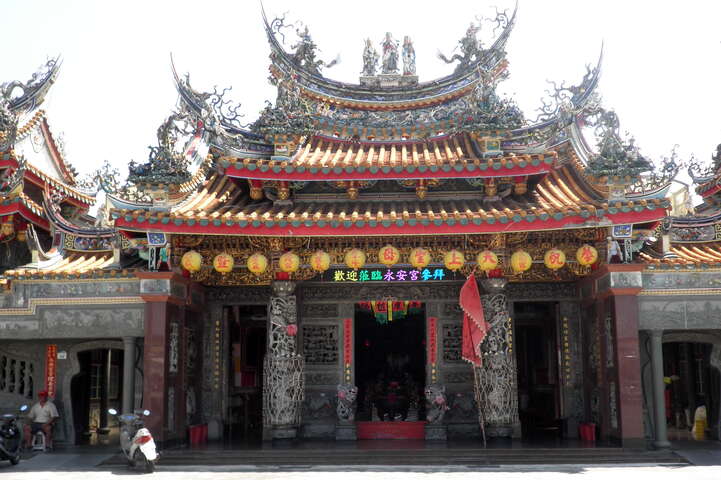
The Tianwen Temple covers an area of three hectares, making it the largest temple in the Yong'an area, built in the northern temple architectural style. The temple is primarily dedicated to the famous general Xu Fu Qiansui (Xu Jie) from the Tang Dynasty. The establishment of the temple originated from the first official order given by Xu Fu Qiansui in Xiaqie Ding to build a Wangjiao festival for celestial patrols. In the 48th year of the Republic of China, it began providing lamps for offerings, and construction commenced in March of the 66th year, completing in the 68th year. The main hall enshrines the deity Zhendong Tudu General Xu Fu Qiansui, with a flag stand at the entrance to announce to the world that this is the General's residence. In the back, there is a figure of the general’s subordinate holding a heavenly horse, indicating that the general is always prepared to set out and alleviate the suffering of the people. The architectural style of Tianwen Temple features a palace-style hip roof (known as a nine-ridge hall in the Song Dynasty) with double eaves, designed and constructed by the renowned temple architect Mr. Hsiao Wan-sheng from central Taiwan. The courtyard has unique landscaping, with the east and west corridors adorned with dragon decorations sampled from various historical cultural periods, distinguishing it from other temples and creating its unique architectural characteristics. Every year on the 18th day of the first lunar month, a grand celebration is held for the birthday of Xu Fu Qiansui and other deities. Since the 69th year of the Republic of China, the temple has hosted calligraphy and painting competitions, focusing on the themes of 'spirituality,' 'culture,' and 'leisure,' integrating temple culture to showcase local humanistic spirit. A series of activities includes not only calligraphy and painting competitions but also a static cultural exhibition featuring the historical achievements of Tianwen Temple. There are also experiences such as the Peace Gate and the throwing of divination lots for the scholar's brush (regarded as the Wangye brush), attracting a considerable number of young people each year hoping to gain the divine brush to succeed in various exams and achieve high rankings.