Toyota Datong Theater Introduction
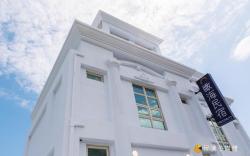
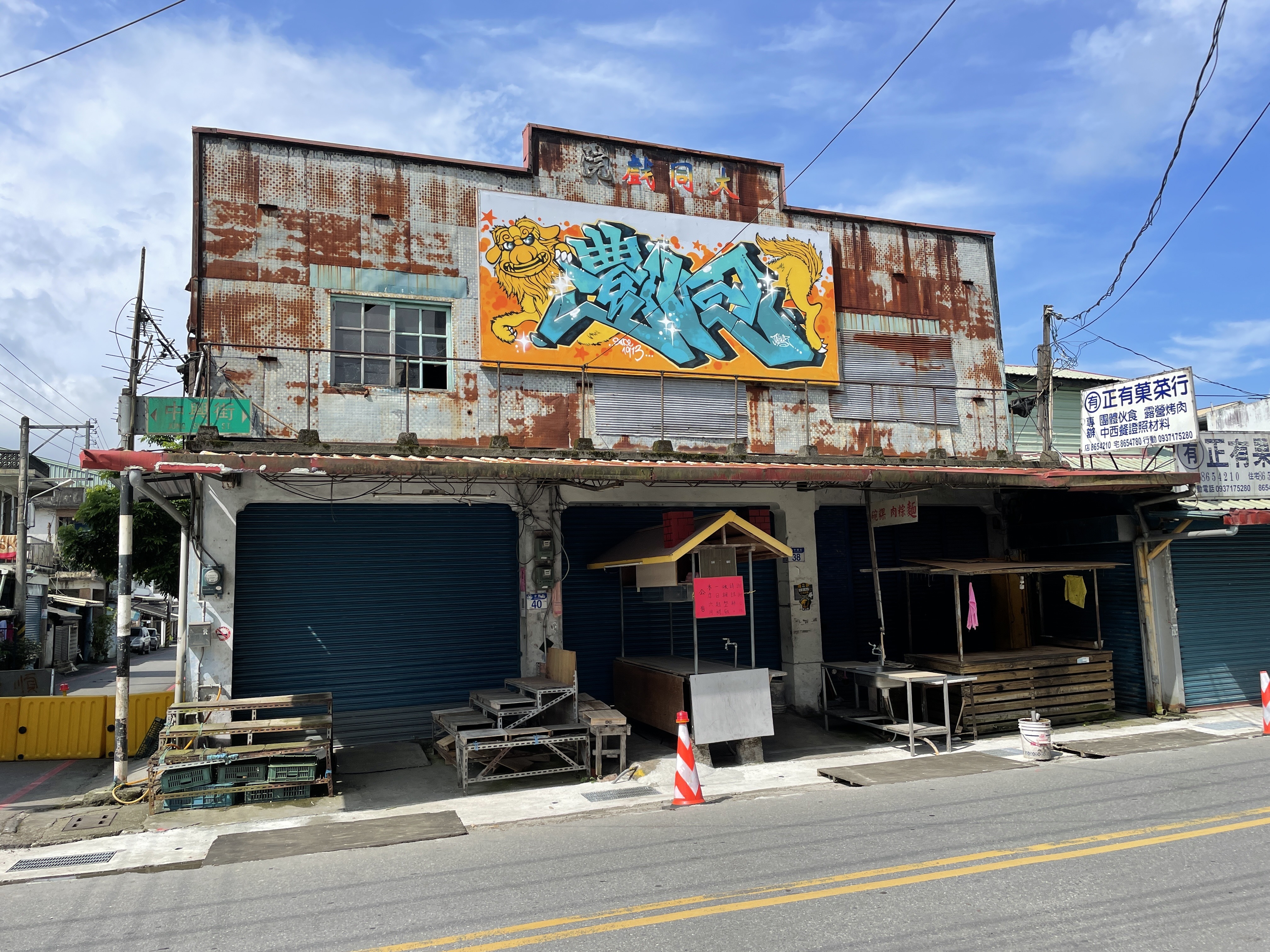
The Datong Theater is located in Fengtian Village, Shoufeng Township, Hualien County. Built in 1913 by the Japanese, it is one of Taiwan's three major government-operated immigrant villages. Besides the influence of Japanese era culture, the history of Fengtian over the past century has also been shaped by the jade industry in the 1970s, which accounted for nearly 90% of the world's jade export, with an export value reaching 5 billion, making it once the most bustling and prosperous area in Hualien. The theater was constructed in 1960 and served not only as a cinema but also as a cultural and recreational center for the community and a performance venue. The closure of the theater was ironically linked to Fengtian's prosperity at that time, as families began to acquire televisions, drastically impacting the theater's revenue and leading to its shutdown. Subsequently, the theater transformed during the prosperous period of Fengtian jade and seedless watermelon, converting its compartments into "collective housing" to provide temporary accommodations for jade polishers and watermelon merchants. However, this good fortune was short-lived. In the 1980s, the mining of Fengtian jade was banned, and seedless watermelon production ceased due to soil depletion, leading to the gradual decline of Fengtian Village. The theater, once transformed into collective housing, also closed its doors. To make matters worse, the prosperity brought by jade led residents into addiction and gambling; the theater's owner sealed all windows and doors with iron plates to prevent drug users from entering. The theater remained sealed for 40 years, having witnessed the splendor of Fengtian, but ultimately became a ghost house in the modern rural fable told by the next generation of village children. In 1994, the Niu Li Association was established locally to address issues such as single-parent and grandparent-led households, children's dropout rates, and youth drug use and violence in Fengtian Village after the decline of prosperity, developing local work based on community engagement. In 2001, it was officially registered as a legal entity, adhering to the principle from "The Great Learning": “Elderly should have their end, the capable should have their use, and the young should have their upbringing, while orphans, the solitary, and the disabled should all be cared for.” It has dedicated itself to community building for 30 years. The association emphasizes caring for people’s self-identity with their hometown and land, collecting and sorting all historical materials related to Fengtian, aiming to create a village where children and elders can reside, and young people can return to work with peace of mind. In 2021, it further collaborated with a local team to establish the local revitalization organization “Shanxia Line” to reopen the Datong Theater, which had been sealed for decades. With support from the current five owners for unconditional free use, the Ministry of Culture initiated restoration work for the theater. The community energy accumulated by the association over the past 30 years is now manifesting; the theater's renovation involved inviting Fengtian youth to join the restoration efforts, with over thirty local youths working alongside children to dismantle the damaged roof, repair the fractured floor, and remove the partitions of the former collective housing to restore the theater to its original appearance. This restoration was completed on July 6, 2023, and the theater officially reopened. The rebirth of the theater witnesses the local history and culture and serves as an entry point for local experiences. The interior includes family-friendly spaces, performance areas, and diverse cultural activities, making it an important cultural base in Central Hualien, even though it has only been reopened for a year and a half. The "Datong" characters above the theater have also become a significant core vision for Fengtian and the Shanxia Line area.
 355337235_288244357099818_4522403517497873265_n
.JPG) DSC07958 (Large)
DSC07958 (Large)