Shihkuanyin Jiansian Temple Introduction
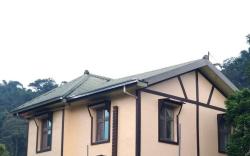
In the second year before the Republic, during the Japanese colonial period, the area of Wucheng Village and Xinxing Village had naturally grown excellent camphor trees, which were highly valued by the Japanese for camphor oil production. The workers handling the camphor oil, known as "naoting," experienced an incident while transporting it. One worker suddenly suffered from abdominal pain after a meal and fainted at this location. A colleague, seeing a small amount of water under a rock, hurried to fetch it and drink it. Afterward, the abdominal pain was alleviated, and he felt revitalized. Three years later, during the Dragon Boat Festival in the first year of the Republic, dark clouds suddenly gathered, and strong winds led to heavy rain, causing landslides that revealed seven stone lotus flowers. The next day, workers from Jiji, upon seeing this, promptly spread the word, bringing two to thirty naoting to come and visit. Following this, a well-known local geographer named An proposed the name "Guanyin Seat Lotus," prompting a meeting among naoting to discuss building a temple. In the second year of the Republic, a wooden Guanyin Temple was constructed, named Jixian Palace Stone Guanyin Bodhisattva. Later, a railway was developed across the street, facilitating transportation and inadvertently spreading cold and fever epidemics, leaving many people with pale faces and weak limbs. The Guanyin Bodhisattva of Jixian Palace displayed great compassion, delivering dreams to good men and believers, prompting them to come and fetch the holy water. Between the thirty-second to thirty-fourth years of the Republic, American bombings targeted the Daguang Power Plant, with attacks occurring every three to five days, causing widespread fear and unrest among the populace. The temple, Jixian Palace Guanyin Bodhisattva, demonstrated its powers, protecting the local people and ensuring that no lives were lost during the bombings. On October 25th of the thirty-fourth year of the Republic, Taiwan was unconditionally restored, and the people expressed their gratitude to the Bodhisattva for her compassion in saving them. In the thirty-fifth year of the Republic, the gentry of the village unanimously agreed to rebuild the temple with brick. After the completion of the Minghu Pumped Storage Power Station in the seventy-first year of the Republic, the road was widened to two lanes, improving transportation access significantly.