Wang'an Flower House Settlement Introduction
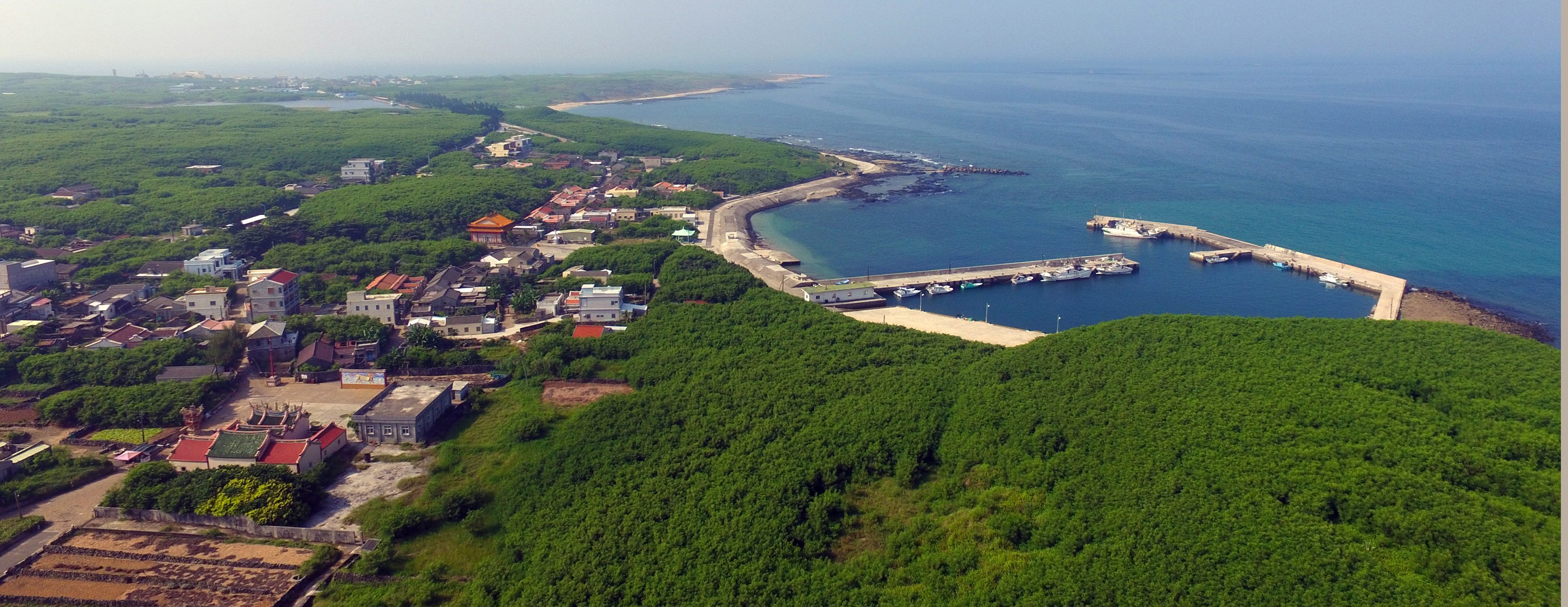
In the late Ming Dynasty, the early settlers began to leave southeastern China in search of new opportunities overseas for survival. As they sailed through the vast sea, they came across an unknown island. From the sea, the island’s undulating topography resembled a flower, a place that could perhaps become a new haven for living. Thus, the settlers' boats approached the island, and the bay proved to be an excellent refuge for their vessels! Consequently, this place on the island with a naturally good harbor began to welcome more and more of the settlers’ boats. This group named the area, which resembled a flower, "Huazhai" (Flower Residence), relying on fishing for sustenance, while simultaneously beginning to cultivate the land and gradually understanding the island, identifying resources and conditions suitable for living there, accumulating materials for settling down. Over time, builders possessing construction skills brought architectural forms from their homeland, taking advantage of local materials and adapting to the terrain, wind, and water, along with the communal needs of the same family. Thus, in the "residence" among the flowers, a more complete form gradually emerged, with houses forming alleys and paths. The deity Ma Zu, providing protection for safe sea voyages and revered from their homeland, was enshrined at the center of Hua Xin, also known as Shan Zi Wei, a long and sacred mound that became significant to the settlers. Therefore, on this elevated area at the center of the settlement, there were no houses or fields. The fishing boats near the island became the primary livelihood for the settlers. After becoming islanders, they gradually learned about the surrounding marine ecology over the seasons. To process the plentiful catches of the summer season, they built numerous fish drying facilities at the locations adjacent to the sea, forming a village industry engaged in fish processing. This also provided women in the village with an additional opportunity to supplement the household income beyond daily chores related to farming and gathering in the intertidal zones. The air by the seaside of Huazhai was filled with the aroma of fish being cooked, with neatly arranged dried fish on bamboo racks, ready for sun-drying and packing for sale off the island. This was the essence of summer in Huazhai from the 1950s to the 1970s, filled with the busy and fulfilling activities of village life, where both adults and children found joy. After autumn transitioned into winter, it was the season for white pomfret. The success of fishing income depended heavily on the winter sea. The sweet potatoes, preserved vegetables, and dried fish stored during summer supported families through winter. Even though life was hard, the dedication to worshiping deities and honoring ancestors remained unchanged. Besides the offerings of livestock, women made rice cakes with black sugar, tapioca flour, and regular flour, while rolling and shaping sweet rice balls, as well as making dog-shaped pastries during the winter solstice, praying for plentiful catches in the winter season for their boats. After the 1950s, the lucrative income from distant ocean fishing in Kaohsiung attracted the people of Huazhai, who had always relied on the sea, to take their accumulated marine experiences away from the island. Gradually, this place became the hometown of these individuals, retaining the foundations laid by the early settlers throughout history, with features such as alleys and wells remaining unchanged, while the changes in building forms and materials reflected the cultural trajectory of the locale.
 Hua Zhu Settlement Guide - Wu Fu Qian Suo Temple
 Huazhai Settlement Tour - Bingzhi Factory