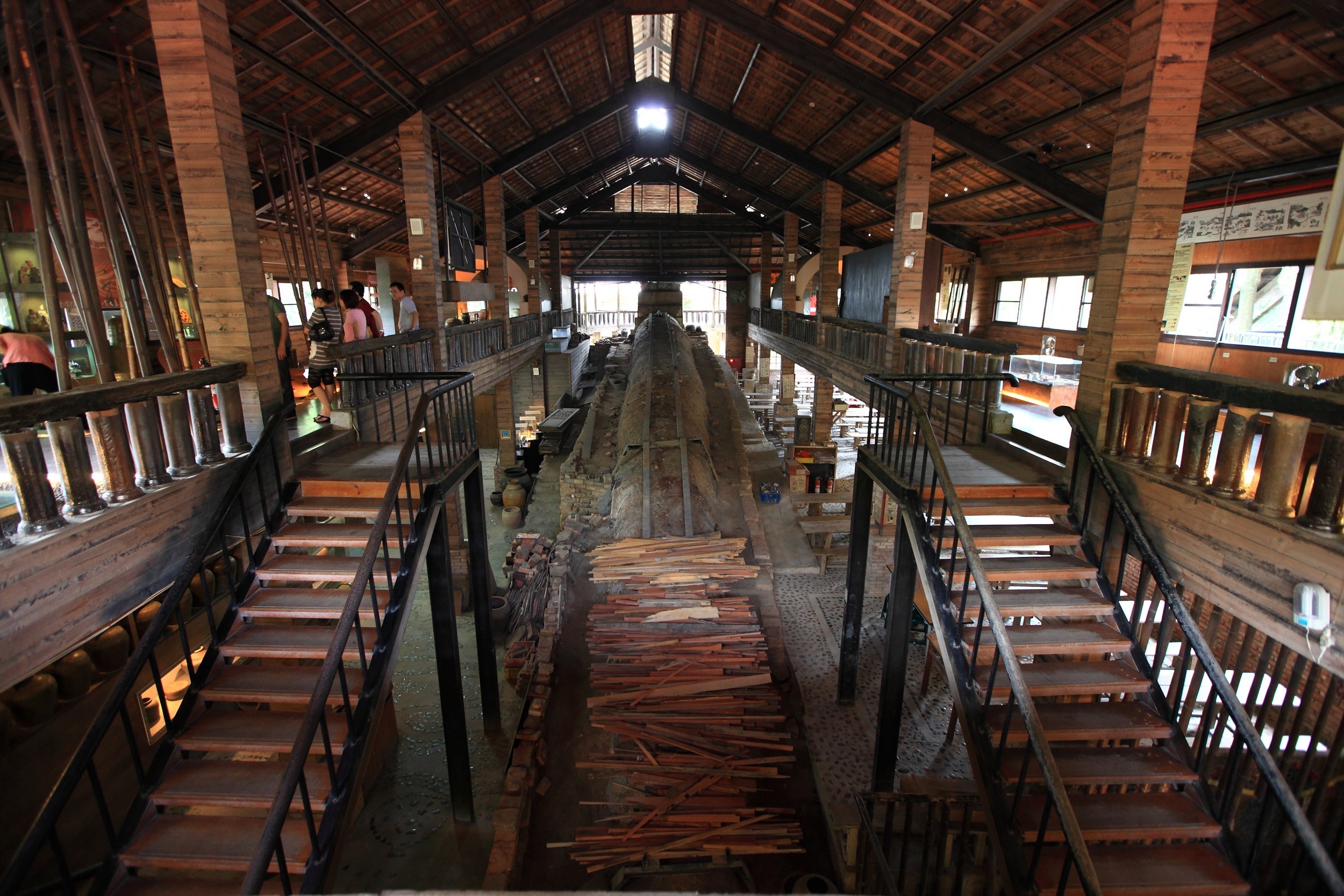
Shueili Snake Kiln Ceramic Cultural Park Introduction
Located in ShuiLI Township, Nantou County, the ShuiLi Snake Kiln is one of the most well-preserved traditional wood-fired kilns in Taiwan, with a history of nearly a century. Named "Snake Kiln" because of its serpent-like design, it was established in 1927 by the Lin family ancestors and initially focused on producing practical pottery, such as jars, bowls, cups, and containers, to meet the daily needs of local residents. Today, the Snake Kiln has transformed from a production base for utilitarian pottery into a cultural tourism park, symbolizing pottery culture and wood-firing techniques. 1. The Inheritance and Characteristics of Wood-Firing Techniques The core feature of the Snake Kiln lies in its traditional wood-firing technique, which requires lengthy high-temperature burning to display the naturally unique mottled patterns and glazes of the pottery. The wood-firing process is not only time-consuming and labor-intensive but also demands that artisans possess profound skills and experience, including controlling the kiln's internal temperature and flame direction. The uniqueness of wood-fired pottery is found in the "kiln change" effect, where the naturally formed colors and textures cannot be completely replicated, making each piece a one-of-a-kind artwork. The architecture of the Snake Kiln combines with the natural terrain, utilizing a slope design for the kiln body to extend the kiln space, facilitating control of the flame flow and heat distribution. Artisans feed firewood into the front of the kiln, allowing flames to extend from the front to the back, and after prolonged burning, the pottery absorbs minerals from the ash, forming a natural glaze. This technique combines the interaction of fire and earth, reflecting a profound understanding and application of natural forces. 2. Local History and Cultural Value The construction of the Snake Kiln originated from the rich clay resources in the ShuiLi area and the early rural society’s demand for pottery. At that time, pottery was an essential item in the daily lives of rural families, and the pottery produced by the Snake Kiln not only supplied the local community but also circulated to other areas through the market, becoming an essential pillar of the local economy. The Snake Kiln is not just a kiln; it also records the local history and the lives of its residents, showcasing the pursuit of practicality and aesthetics in rural society. 3. Cultural Transformation and Renewal With the passage of time, traditional pottery has gradually been replaced by modern industrial products, posing operational challenges for the Snake Kiln. However, the third-generation kiln owner, Lin Guo-long, transformed the Snake Kiln into a cultural tourism park with innovative thinking, reassigning it cultural and artistic value. The park features pottery-making experience activities and exhibition halls where visitors can participate in hands-on courses like wheel-throwing and hand-building, experiencing the pottery-making process. Additionally, the Snake Kiln hosts ceramic art exhibitions and international pottery exchange events, attracting pottery enthusiasts from both domestic and abroad. Through these efforts, the Snake Kiln not only continues the wood-firing technique but also becomes an essential platform for promoting Taiwanese pottery culture. It has evolved from just a pottery production site into a cultural space integrating education, art, and tourism, allowing more people to appreciate the uniqueness and value of pottery techniques. 4. The Story and Spirit of the Snake Kiln The story of the Snake Kiln is one of perseverance and innovation. The Lin family has upheld their love for the land and craft through generations, witnessing the rise and decline of local industries from the production of everyday pottery to cultural promotion today. It also inspires a reevaluation of the value of traditional techniques, emphasizing the natural and humanistic sentiments embedded in handcrafted items.
 Shui Li Snake Kiln - Jar Wall 3
 IMG_2905