Ruby of the Southern Paiwan - Kaohsiung City Buddha Temple Introduction
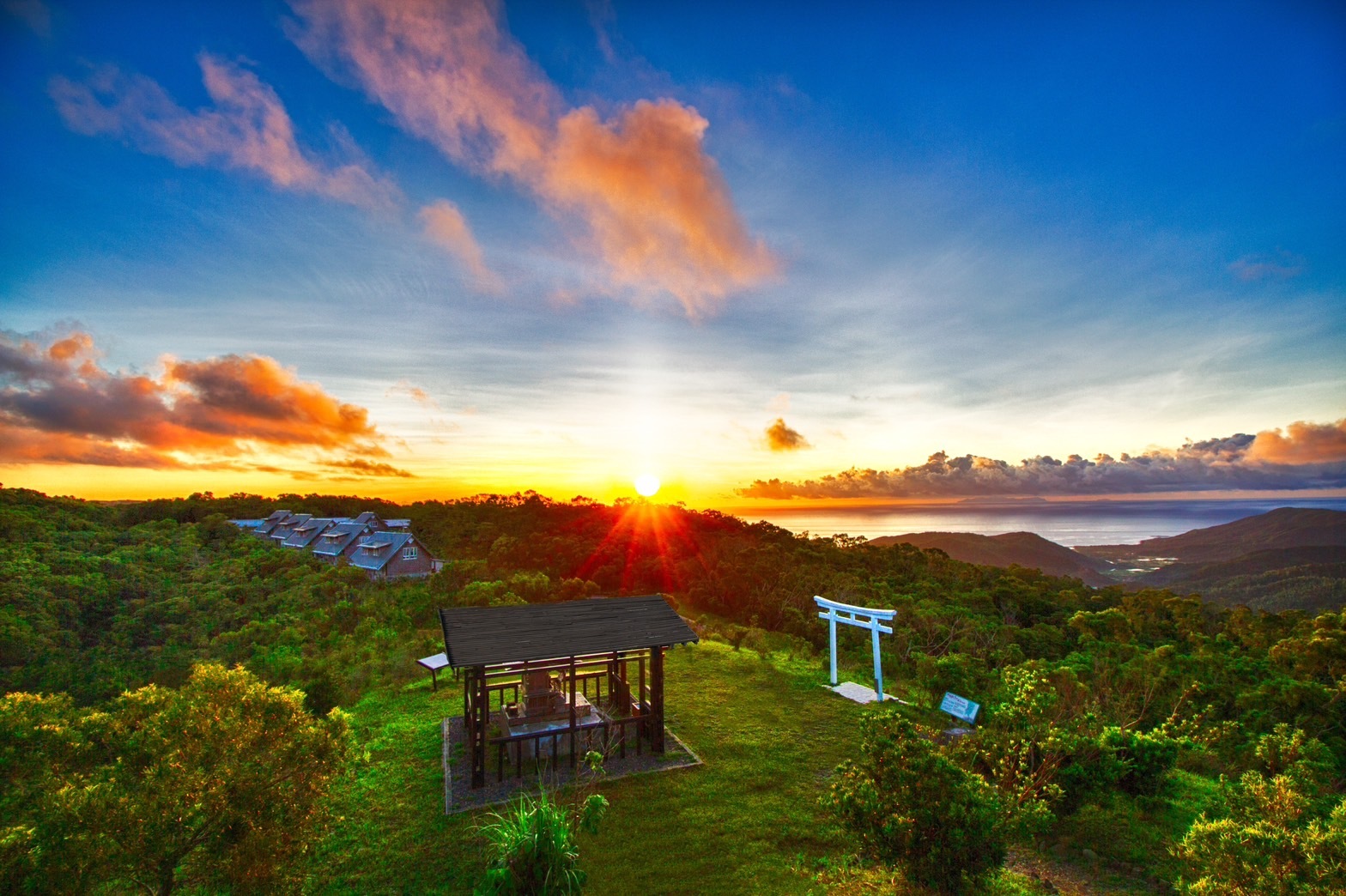
The white torii and shrine facing the Pacific Ocean are located in the southernmost part of Taiwan, inhabited by the Paiwan people, specifically the Kuskus community. An international incident that occurred in Taiwan: The 1871 Baodao Bay incident led to the Mudan incident, resulting in the deaths of fifty-four Miyako Islanders, which prompted the Japanese to instigate the Mudan incident in 1874, a conflict between the indigenous people and the Japanese. This area has seen cooperation, integration, and competition among diverse ethnic groups. Gaoshi Village is located at the southern end of the Central Mountain Range (northeast of the Hengchun Peninsula), southeast of Mudan Township, facing the Pacific Ocean in the east near Gangzi Village in Manjhou Township, west next to Shimen Village in Mudan Township, south adjoining Changle Village, and north neighboring Mudan Village. The total area of the village is 25.54 square kilometers, with a population of approximately 711 people across 137 households, the vast majority of whom are Paiwan indigenous people. During the Japanese occupation and until the Nationalist government relocated to Taiwan (in 1946), Gaoshi Village served as the political and educational center for the indigenous tribes of Mudan Township, covering areas that now belong to Manjhou Township, including Changle Village (formerly known as Baliao Tribe), which had a police station and public school established in Gaoshi. The majority of the population in the Gaoshi community descends from the Gaoshi folks who originally inhabited the area around Gaoshi Mountain. Therefore, whether in its prosperous past or with the current dwindling population, the villagers can quickly rally consensus under the name of Gaoshi Tribe, making it a rare robust community within Paiwan society. Surrounded by mountains, Gaoshi Tribe boasts beautiful scenery, including the sunrise in the east, sunset in the west, the ever-changing rain dance, the roaring sea, and the stunning views of the Gaoshi Ladder Path. The most captivating of these is the path known as Warrior Road, which offers an eastern view of the Pacific sunrise, a western view of the sunset over Mount Dawu, and a panoramic view of the village. The historical path of Gaoshi, called sadjundjung (pronounced “sah-jung-jung”) or Warrior Road, was recounted by tribal elders, stating that before the tribe migrated to the current Gaoshi area, early villagers lived at the summit of this ancient path (the old village). Since rice fields were situated at the foot of the mountain, the route they took often passed through here, transporting harvested rice from the base of the mountain to the top. The steep slope led to the name sadjundjung, meaning "knees touch the nose," which became widely known. Cultural heritage exists in the old Gaoshi community, Saqecengdj. If there were a time machine, what era would you want to return to? E: I would like to go back 500 years to the old Gaoshi community, saqacengalj, because I want to know how they built their houses! The construction techniques and materials of stone slab houses utilize the weight of the stones themselves, combining precise cutting and stacking techniques with iron and stone tools, along with beams. The origins of the old stone slab houses remain unexplored since the tribe has migrated numerous times, and their construction methods and designs have not been passed down. We hope to explore and replicate them through experimental archaeology in order to construct stone slab houses that reflect the geological terrain of the Southern Paiwan culture and the eastern coast of the Hengchun Peninsula.
 Station Training
 Torii Interpreter_1