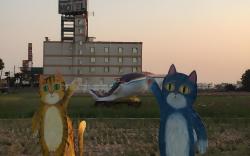
-農田地景.jpg)
Huwei Jianguo Community Introduction
Huwei Jianguo Military Dependents' Village Features - Rural-Style Military Dependents' Village, WWII Japanese Military Sites, Daily Life in the Dependents' Village, Remnants of Military Barracks Huwei Jianguo No. 1 and No. 2 Villages are a cluster of buildings located in Yunlin County, covering an area of up to 30 hectares. It is currently the only preserved rural-style military dependents' village in Taiwan. It has undergone transformations from a rural community during the Qing Dynasty, to a WWII Japanese military training base, and later an Air Force dependents' village. The village still retains a significant amount of WWII Japanese military sites and traces of daily life in the dependents' village, such as air raid shelters, Japanese military turning paths, car repair ditches, and water conservancy facilities. Each segment of history holds different narratives and memories, reflected in the existing sites and structures that showcase diverse traces from different eras. The unique characteristics are presented by different historical periods: 1. Rural Period (-1943): The precursor to Huwei Jianguo Military Dependents' Village was an old rural community in Taiwan, with historical locations such as Hebi Liao (now Huwei Jianguo No. 1 Village) and Zhuwei Zi (now Huwei Jianguo No. 2 Village) identifiable on Qing Dynasty maps. In the fall of 1943, due to urgent training needs, the Japanese military forced relocation of residents in Hebi Liao and Zhuwei Zi to build military barracks. Residents carried their bamboo houses to new locations at night, making the story of their relocation a shared memory among those living near the village. The present agricultural landscape belongs to the rural period. 2. WWII Japanese Military (1944-1945): After the rural relocation, the village was established as a barrack area for the Huwei Airfield, and in May 1944, the Huwei Naval Air Corps began training. Many young pilots from Japan completed their initial flight training in Huwei. Besides the airfield training and barracks, accounts from Japanese veterans reveal memories of life and entertainment connected to the Huwei area. After 1945, with shifts in training missions at Huwei Airfield, pilots came and went, and before the end of the war, they trained for special attack units engaged in the Pacific front. The war concluded in August 1945, and although the Japanese military trained in Huwei for less than two years, it remains a collective memory among the older Huwei residents. The site preserves a large number of military remnants and landscapes. 3. Air Force Dependents' Village (1949-2006): After the war, Huwei Airfield and barracks were taken over and transformed into Huwei Air Force Base and a military dependents' village. In 1949, following the retreat of the Nationalist government to Taiwan, military personnel and their families living in the village were housed in the barracks left by the Japanese military. With the necessities of life, there were organic renovations and air raid shelters, while the gaps in the village became spaces for side businesses. The diverse lifestyles and culinary cultures of residents from various regions merged within the dependents' village, reflecting experiences from hardship in the post-war period to a more stable life later on. Today, there are still many traces of post-war military dependents utilizing the Japanese barracks. Through the historical context described, the close connection between historical development and local environment can be observed. It is evident that all three periods are related to war and its influences, encompassing movement, departure, and emergence. The hope is that through a deep connection with war memories, and the preservation of agricultural landscapes as a result of the war, Huwei Jianguo Military Dependents' Village can promote anti-war thinking and agricultural education. By sharing stories from various eras and connecting with the international community, the cultural connotation and development of Huwei Jianguo Military Dependents' Village can expand and diversify.
-眷味廚房.jpg) 02 Huwei Jianguo Military Village (2) - Veteran's Flavor Kitchen
02 Huwei Jianguo Military Village (2) - Veteran's Flavor Kitchen
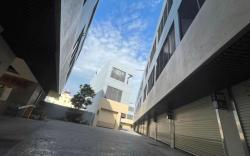
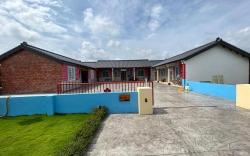
-日軍兵舍.jpg) 03 Huwei Jianguo Military Village (3) - Japanese Army Barracks
03 Huwei Jianguo Military Village (3) - Japanese Army Barracks