Huangxi Academy Introduction
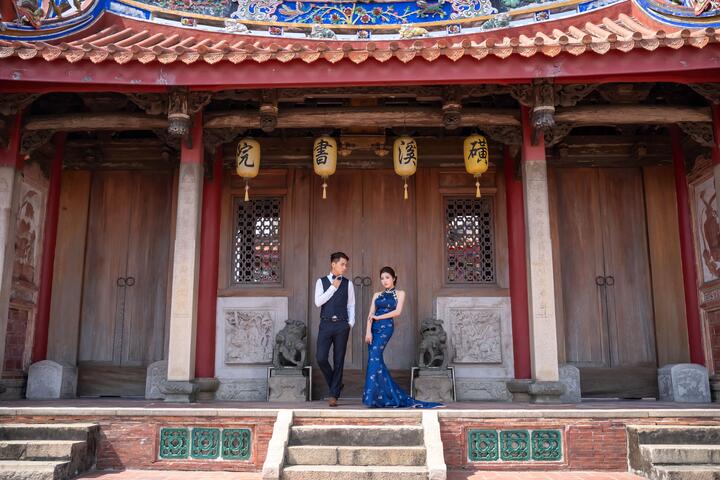
Originally established as the Si Yong Society by gentry Zhao Shunfang and Yang Zhan'ao during the Jiaqing era of the Qing dynasty, it is also known as the Wenchang Temple. The Huangxi Academy was built in the 14th year of the Guangxu period (1888) to educate the youth of today's Dadu, Longjing, and Wuri districts. Inside the hall is the Wenchang Dijun, the deity associated with academic success. As the admission exams for universities and vocational schools approach, the hall is filled with copies of test admission tickets from students. The academy's layout features a traditional siheyuan design with two courtyards, dual protective dragons, seven sections, and four worship pavilions, representing a typical academy architecture of the Guangxu period. The building materials include ornate bricks, green stones, Quanzhou white stone, and Fujian fir, making it exquisite and comparable to the Changhua Eastern Academy. Scale: The Huangxi Academy, commonly known as the Wenchang Temple, worships Wenchang Dijun and includes a worship hall and main hall. The ancient plaque in the academy reads: "Yage Xiaoyi," inscribed by the royal guard Liao Jinhua during the Guangxu Dingxu examination. Along with it are couplets on stone pillars: "Huangshi Shudan Biside Chashan, the stream reflects the green layers creating literary waves." and "Huangqi connects the celestial seat, stream traces link the colorful platform." A large ancient bell from Huangxi Academy was looted by Japanese troops during World War II and is now placed in the campus of Dadu Elementary School. The inscription on the bell reads: "Huangxi Academy, Wenchang Dijun, in the 15th year of Guangxu, on the day of the autumn harvest, respectfully presented by local gentry and shopkeepers." Huangxi Academy is the oldest surviving building in the Dadu District and the only existing academy in Taichung City, now designated as a municipal historical site. Commonly referred to as Wenchang Temple, Huangxi Academy served as an educational center for the Dadu area (including Dadu, Wuri, and Longjing) and has a history of over 130 years since its construction in the Guangxu era. Its materials, design, and construction techniques are remarkably sophisticated, especially known for the exquisite craftsmanship of brickwork, making it an outstanding work of cultural and educational architecture from the late Qing dynasty. Since its establishment during the Qing period, Huangxi Academy has been a spiritual symbol and cultural fortress for the Dadu area. The ancestors of the early residents received enlightenment education here, and during the imperial examination era, many scholars emerged from this academy. Throughout generations, it has maintained a strong academic tradition, with numerous aspiring individuals coming from Huangxi Academy. Even today, the Dadu District continues to flourish in cultural pursuits, famously known as the "Hometown of Principals." Guided tour explanation: ■Available □Not available ■Reservation system. Reservation phone: 04-26991105. Group tours are open for application when the number of participants reaches 10 or more.