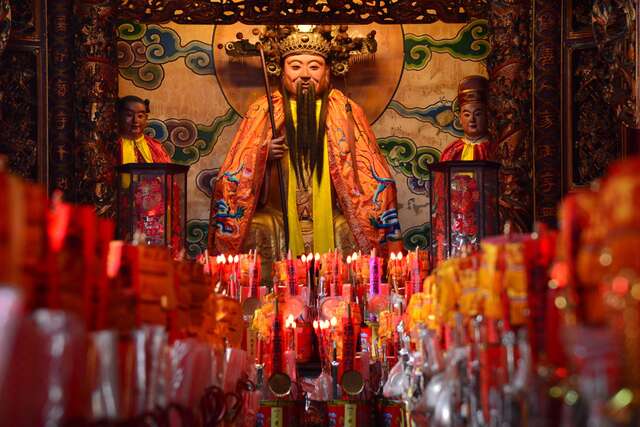
Xikang QIng'an Temple Introduction
Xikang Qing'an Temple was established in the 51st year of the Kangxi reign (1712) and its history can be traced back to the Zheng dynasty period. The troops of Zheng Chenggong considered this place a "carp hole" and believed that building a temple would help the local development, thus leaving behind the statues of the Zhongtanyuan Marshal and the City God. In the Kangxi period, they received a portion of the incense from the Mazu Temple and welcomed Mazu as the main deity. The legend of the "Carp Prince" at Qing'an Temple is reflected in various decorations throughout the temple, such as the carp cutouts on the temple roof and the carp flags used to convey messages during the ritual, highlighting the important status of carp in the hearts of the worshippers. Taiwan's first major incense event: Xikang Guixiang Known as Taiwan's first incense, the Xikang Guixiang event, held every three years, boasts a history of over 200 years without interruption. "Guixiang" refers to the procession of the god to 96 villages to bring peace to the worshippers. Among the incense retinues formed by the devotees, the most famous is the 70-segment-long "Centipede Array," which weaves through the town, making it a must-capture focus of the event.