Cifeng Temple Introduction
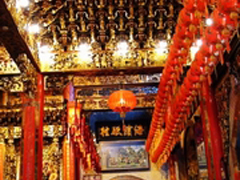
During the Yongli period of the Ming Dynasty, a monk who worshipped Mazu crossed the sea from Fujian to Ahou (present-day Pingtung City). Initially, he temporarily enshrined the statue of Mazu in the government office for sincere worship. However, it was perplexing that every midnight, a flickering red light would appear. At first, people could not understand the meaning of this red light, but after some time, they finally realized that it was a manifestation of Mazu's divine presence. Therefore, a gathering was held to discuss the construction of a temple for worship. This was the distant cause of the establishment of Cifeng Temple in 1737 (the 2nd year of the Qing Dynasty's Qianlong), and it is a miraculous story passed down among believers. Over the 200 years since its establishment, Cifeng Temple experienced the most severe fire in 1983, caused by an electrical short circuit, which almost completely burned down the front and rear halls. However, what reassured the devotees and amazed them was that the deities enshrined in the temple were unscathed. After this disastrous fire, a large-scale reconstruction project lasting fifteen years was launched, resulting in the current appearance of Cifeng Temple. Above the plaque that hangs with the words "Cifeng Temple," one can immediately see the magnificent and ornate cut-and-paste art, featuring vivid figures made of Chaozhou ceramics and various dragon and beast designs. The coffered ceiling above the main hall is formed by layers of golden-painted brackets, not only shining splendidly but also appearing extraordinarily grand. Additionally, there are many historical relics in the temple that are over a hundred years old, such as the intricately carved stone drum and coiling dragon stone columns in the main hall, as well as the plaques and stone tablets inscribed with historical events from the Qing Dynasty. After the reconstruction, Cifeng Temple not only showcases a beautiful temple courtyard but also employs creative thinking to hold numerous cultural activities, allowing people to re-recognize the traditional religious form. Events such as the Ahou Mazu Cultural Festival, the procession of deities, and the competition of the Eight Generals are held, which not only promote the value of religion but also forge deeper cultural connotations.