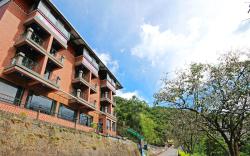
Shui Tian Village Introduction
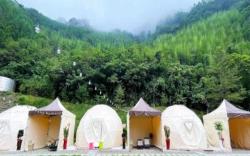
Proceeding towards Xinle Village, the scenery outside the car window flows by, and the bustling sounds of the old street in Nawan gradually give way to the quiet mountain forest world. Arriving at the water rice village, rich in natural ecology, this Atayal indigenous area is known for the North Dalanman Mountain sacred tree cluster and large fields of calla lilies. The mountainous region has preserved its primitive forest appearance, and one can frequently see wild boars, flying squirrels, and Formosan serows; among them, the flying squirrel is the most common, gliding quickly between trees with its wing membrane extended, making it quite amusing and becoming a highlight of local ecological tourism, thus earning it the nickname "Flying Squirrel Village." The mountain scenery changes with the seasons, showcasing different landscapes. In November, the beech trees change from yellow to orange, and in December, the maple leaves make their appearance. During winter, the sea of clouds rolls and flows, making it ideal for a hiking trip to admire the sacred trees, observe the cloud waterfalls, and enjoy a soak in warm baths. The majestic North Dalanman Mountain is a sacred domain for the Atayal people, with an elevation ranging from 1,300 to 1,700 meters, nurturing a diverse and rich variety of species. The cultural customs of the village require boys to venture alone into the mountains, relying on their own abilities to survive and hunt, symbolizing the passage of their coming-of-age ceremony and their qualification as warriors; if they encounter difficulties, they can shout loudly in Echo Valley, allowing their voices to reach the ears of the tribe, illustrating the unique topography of the valley, which is suitable for climbing and panoramic views. On clear days, one can even see the magnificent Jade Mountain. In earlier years, the village fiercely protected its territory, making it difficult for outsiders to enter, allowing the North Dalanman Mountain to maintain an air of mystery, with cypress trees aged over 3,000 to 4,000 years standing in groups, intertwined with ferns and mosses clinging to the rocks or branches, creating a lush greenery worth savoring. Since the water rice village does not have a visitor center, visitors can consult with the elders of Water Rice for relevant tourism information.