Longmen Coastal Park Introduction
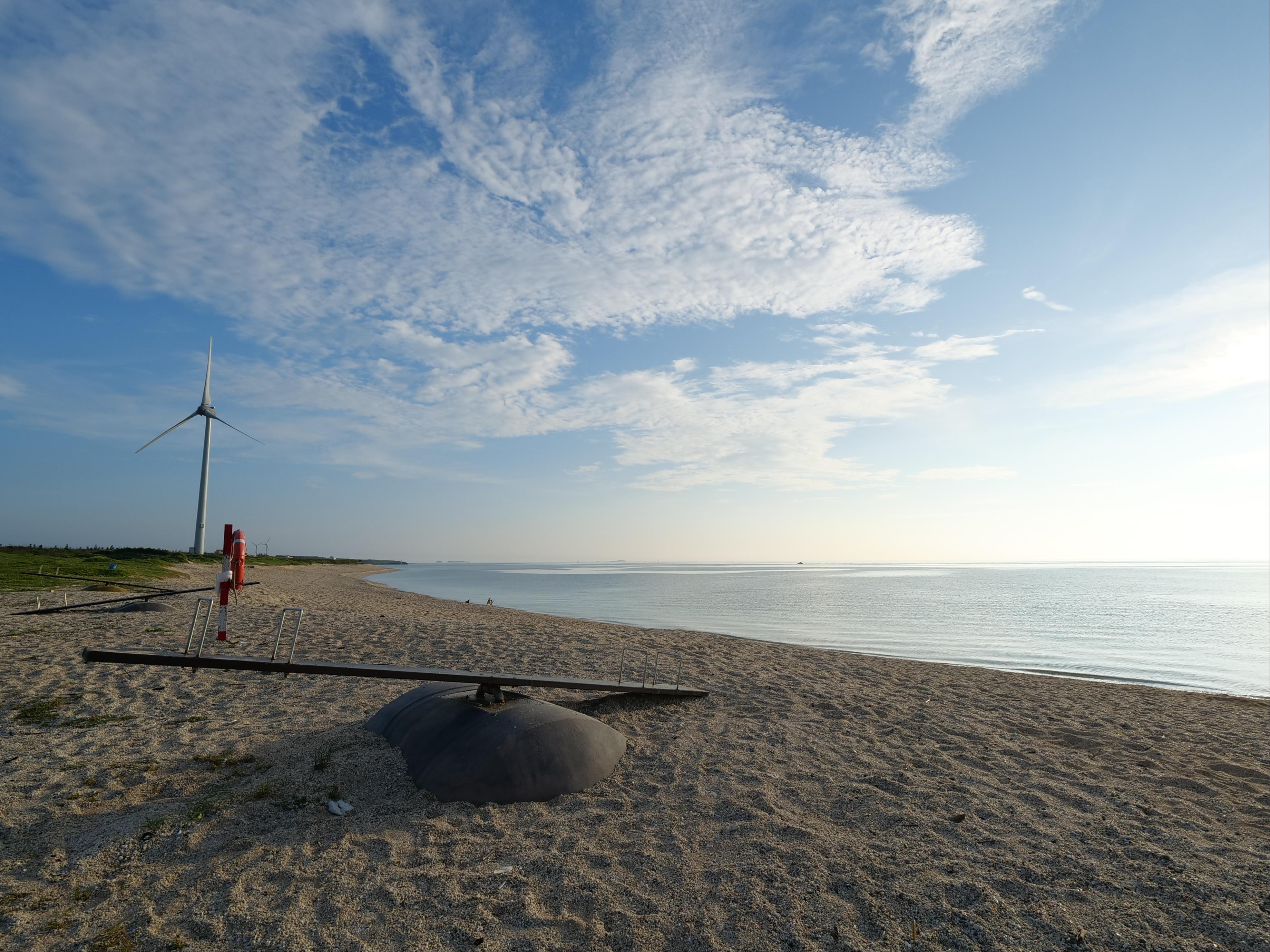
Longmen Coastal Park is located on the easternmost side of Penghu Island, situated in the grassland area between Longmen and Guoye Villages. The Longmen Back Bay Beach within the park faces the Taiwan Strait and features the famous tank-shaped restroom and changing room. Visitors can enjoy beautiful views from the steps leading up. Due to its distance from the center of Longmen Village, the location is relatively secluded, making it perfect for tourists who enjoy off-the-beaten-path experiences. Have you heard the phrase "Night is quiet at Longmen, listening to the waves"? This phrase appears in the "Eight Scenic Poems of Penghu" written by scholar Xu Jinying during the Guangxu era. This description arose from the intricate underwater reefs and the significant elevation differences in the sea, causing the waves to create a drum-like roaring sound upon entering the Longmen waters, hence referred to as "Longmen Drum Waves." During winter, when the strong northeast monsoon hits, the sight of waves crashing against the shore is spectacular. If you want to hear the drum waves, you can go to the coast beside the Longmen Fude Ancient Well to enjoy and listen! If you follow the Huxi bicycle path alongside, you'll reach another beach at Longmen Village—Lijhengjiao Beach, which is suitable for wading and snorkeling in summer. In winter, due to the prevalence of northeast monsoon winds, waves crash against the rocks on the shore, leading to an accumulation of green seaweed, creating a unique scene. This beach also has a special historical background; beside the path leading to the beach, there stands the "Lijhengjiao Japanese Landing Memorial," erected by the Japanese army after their occupation of Penghu during the Battle of Yiyue. The memorial is made of granite and consists of three parts, but now only the upper part remains; the base was added later. After 1945, the inscription was ground off and changed to "Taiwan Restoration Memorial," and in 2000, it was registered as a "County-designated Historic Site" by the Penghu County Government!