Shui Li Snake Kiln Ceramics Cultural Park Introduction
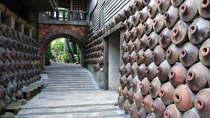
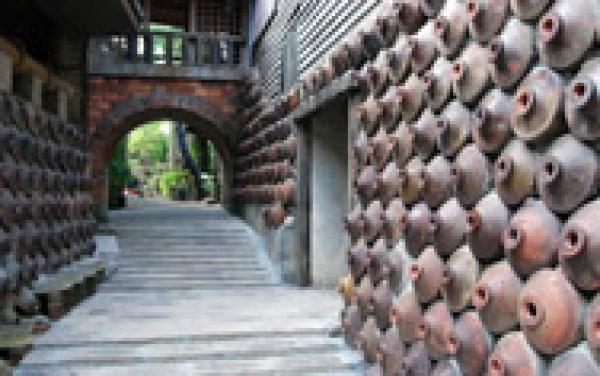
The "Snake Kiln" originated from Fuzhou, mainland China. This kiln is built with earth bricks on a hillside, elongated in shape, resembling a snake from a distance, hence its name. In the late Ming Dynasty, Zheng Chenggong stationed troops in Taiwan to engage in the "Restoration of Ming" movement, but his efforts ultimately failed. The soldiers were disbanded, and among them were those familiar with this type of kiln who settled here, marking the beginning of the Snake Kiln in Taiwan. The Shui-Li Snake Kiln dates back to the 16th year of the Republic of China, when Mr. Lin Jiang-song, a pottery master from Nantou, recognized that Shui-Li was a timber distribution center with abundant fuel and high-quality clay, making it ideal for pottery production. He moved his entire family here to build the snake kiln, which has been producing ceramics ever since. The kiln's interior is spacious, capable of firing larger pottery pieces, and it was initially renowned for producing large ceramic barrels. In the 32nd year of the Republic of China, before the Japanese attack on Pearl Harbor, this factory was commissioned to produce military "air raid barrels," allowing its staff to avoid conscription for overseas military service, underscoring the importance of the Shui-Li Snake Kiln at that time. After years of evolution, the Shui-Li Snake Kiln not only traversed the proud era of the "Shui-Li Ceramic Barrel" but also endured periods of decline. Currently, under the creative vision of the third-generation leader Mr. Lin Guo-long, it has been rebranded as the "Shui-Li Snake Kiln Ceramic Cultural Park," which incorporates leisure, entertainment, and educational functions, preserving Taiwan's oldest and most traditional representative historical wood-fired kiln, showcasing the authentic life of the kiln site. To help the public gain a deeper understanding of snake kiln culture and make it a living teaching material of local heritage, the park has been designed with facilities including a multimedia presentation room, a historical museum, and ceramic art classrooms, with professional guides and on-site artisans conducting tours and pottery classes. The old factory size is maintained to continue producing local specialty products. The aim is to achieve a planned transformation, allowing the snake kiln to offer a blend of rustic local charm and rich intellectual and emotional beauty, passed down through generations.
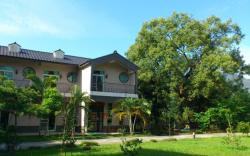
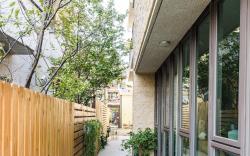
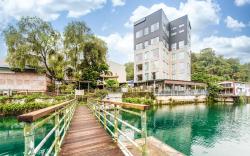
 Featured Scenery
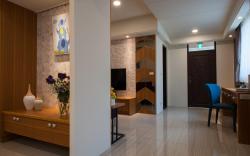
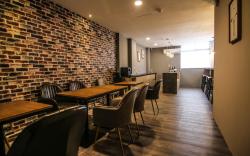
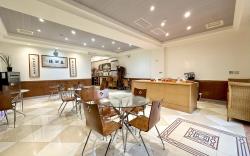
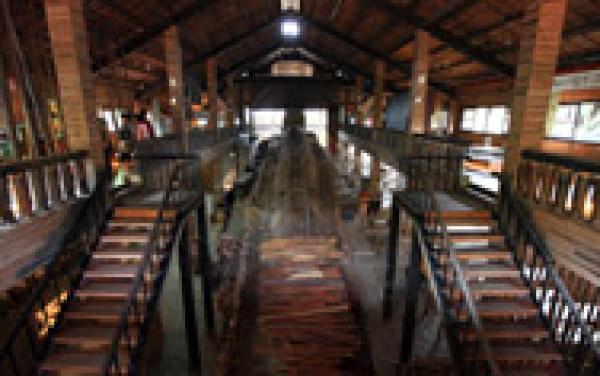 A corner inside the museum