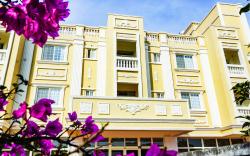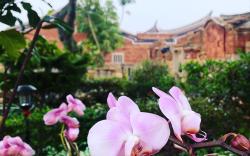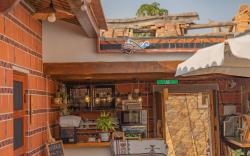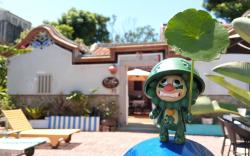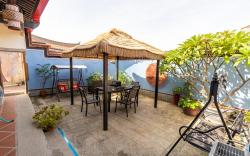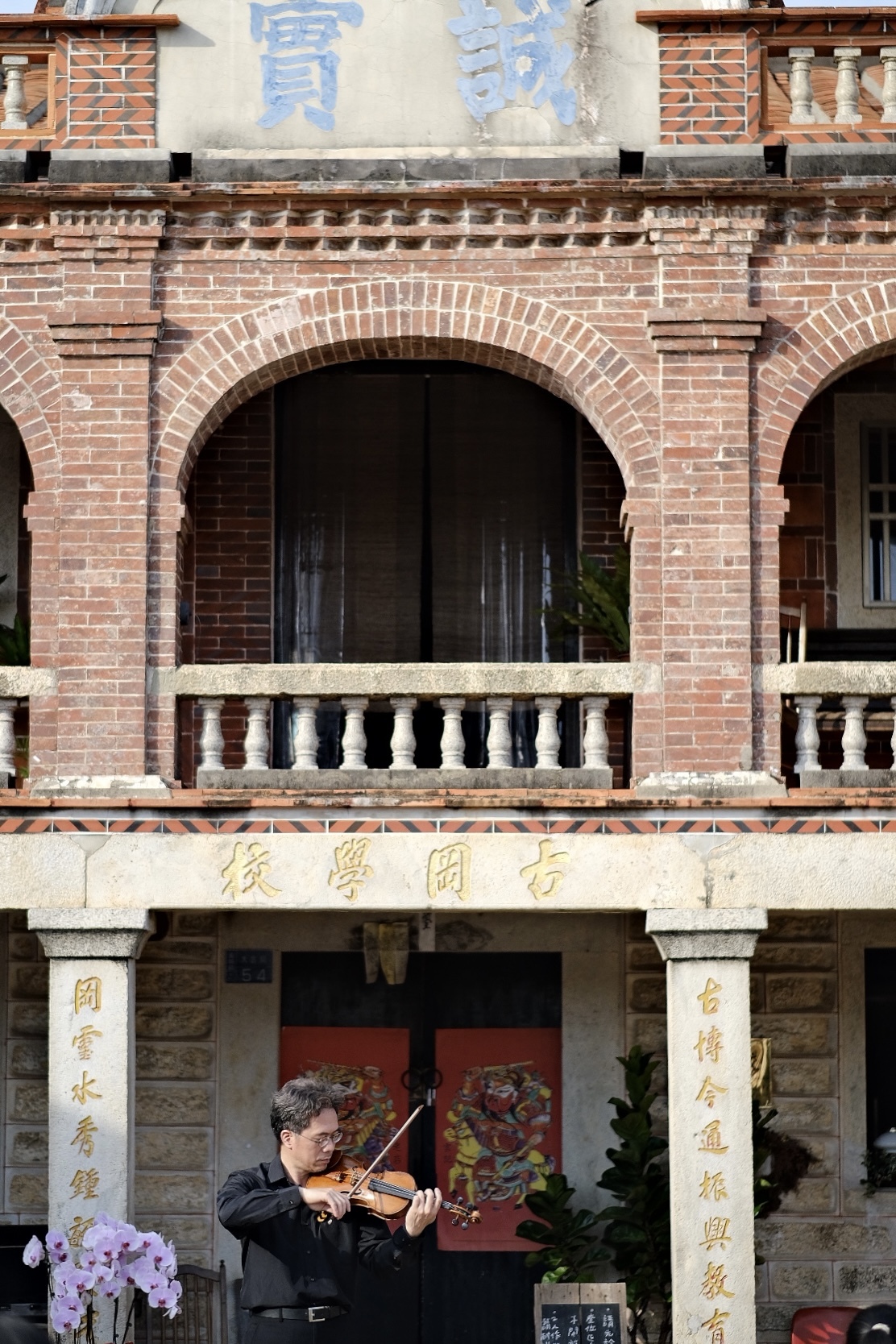
Gugang School Western-style Building Introduction
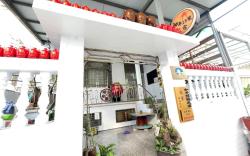
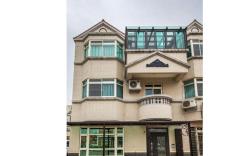
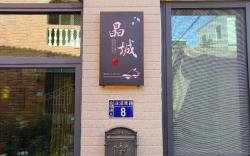
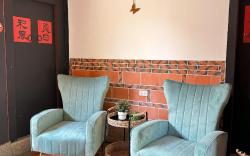
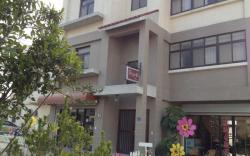
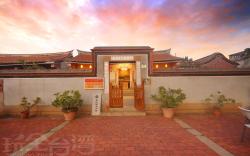
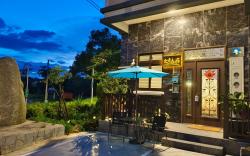
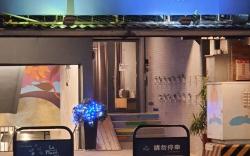
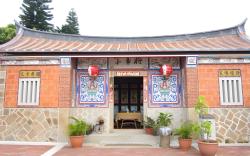
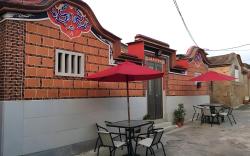
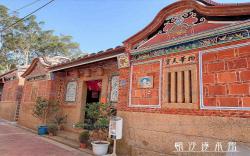
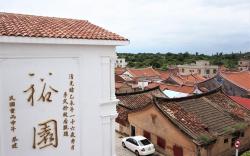
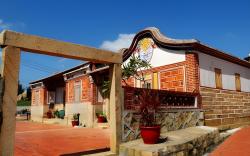
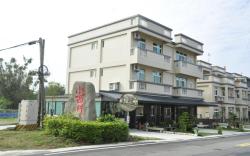
In the second half of the 19th century, after Qing China opened its ports for trade, the long-standing strict controls over overseas maritime communication were broken. As the economies of Southeast Asia thrived under British and Dutch rule, the Fujian people, who had long struggled with limited sea access, began to migrate en masse to Southeast Asia in search of opportunities, a phenomenon colloquially known as "luofan" (落番). Many Fujianese expatriates became wealthy overseas, returning home to build Western-style houses, remitting money back to their hometowns, and promoting modern education, which became a driving force for modernization in Fujian in the early 20th century. Kinmen and Gugang were also part of this historical wave; in the early 1900s, many new schools were established on the island, such as Gugang School, JInshui Elementary School, and Ruiyou School, driven by the grassroots initiatives of overseas Chinese. Dong Yunyao was a prominent representative of the overseas Chinese from Gugang who, upon returning home, rallied the villagers and fellow expatriates to establish a new school next to the ancestral temple. In addition to his own generous donations, Dong Yunyao also established an education foundation, acquiring property in Gulangyu, Xiamen, from which the rental income was used to fund the school's operations. Gugang School was completed and opened in 1922, offering subjects like Mandarin, arithmetic, general knowledge, social studies, natural sciences, and music, with teachers sourced from Gugang, Kinmen, and Fujian. The school also published the "Mirror Light Monthly" to update the overseas community about its educational efforts and promote fundraising. The community-driven Gugang School was later integrated into the Republic of China’s education system and served as the village office and community activity center in 1962, though it fell into disuse for a period. After restoration in 2005, the Dong Clan Association took management, and the Gugang Community Development Association was commissioned to use it as a core base for community building, local revitalization, and educational promotion. In 2023, the community collaborated with local youth teams to reactivate it as a café called "Baihua," where food and beverages are sold, along with lectures, art exhibitions, educational craft experiences, exhibitions, guided tours, and community outreach activities. Gugang School serves as a cultural base in the country for the following reasons: First, it is a historical site within a unique context: the context of new schools in Kinmen differs from that of the church-run private education systems and the Japanese bureaucratic education system in Taiwan, representing a grassroots, cross-sea modernization narrative in world history. It reflects the historically bottom-up, cross-border, and self-reliant social mechanisms of the Fujian region and its long-standing interaction with Southeast Asia. Domestically, this special historical context is unique to Kinmen, which still sees many Southeast Asian expatriates return to visit; Gugang School is one of those representative sites. Second, it is a rare grassroots "community-initiated" cultural heritage site in the country: from its initial establishment to ongoing maintenance and operation, everything has been led by the residents of Gugang, rather than passively relying on the state. In a domestic cultural space that generally depends on public sector leadership, this is indeed special. Third, it has an unbroken "spiritual essence of place." Even today, Gugang School not only runs a café to allow more people to engage but also introduces contemporary ideas and conducts various promotional activities, including arts, crafts, and cultural lectures. It is central to community building, catering to educational needs across all age groups from young people to the elderly. It continues to uphold the foundational spirit of "education" and "community cohesion" established at its inception, making it a rare gem among many domestic cultural heritage sites that have merely preserved their structural shells, lacking meaningful continuity.
 8950DC1A-BD96-4CED-A9EC-03DD01B55B36-53708-0000238DE5CBEBEF
 IMG_7695