Jinmen City Introduction
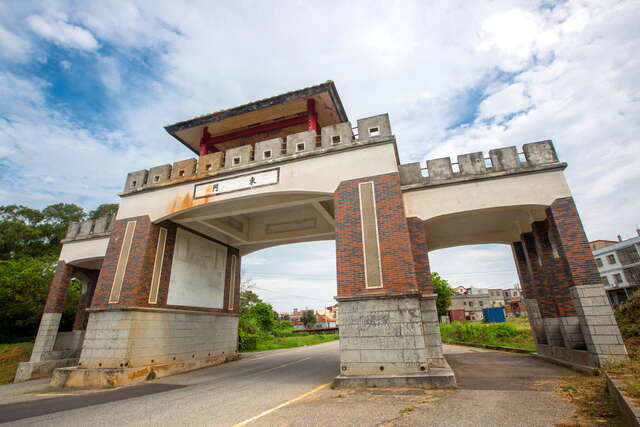
The history of Kinmen can be traced back to the first year of the Jianwu era of Emperor Yuan of Jin (317 AD). During the Ming Dynasty, the "Qianhu Suocheng" (Thousand Households Fortress) was constructed to fend off pirate invasions and protect the residents living there. During the period of Ming Loyalists resisting the Qing Dynasty, Kinmen City was a major stronghold. In the 19th year of the Kangxi era of the Qing Dynasty (1680 AD), General Chen Long moved the General's Office to Houpu, leading to the gradual decline of Kinmen City. Kinmen City has four city gates—east, south, west, and north—historically known by the saying "To Ding go outside the East Gate, to Fu outside the West Gate, to Xing outside the South Gate, and to Guan outside the North Gate." This implies that the East Gate leads to the populous ancient harbor of Gugang; the West Gate leads to Shuitou, where overseas Chinese merchants gather to make money; the South Gate faces the harbor, thriving with commerce; and the North Gate leads to Yannan Mountain and Yannan Academy, where one may seek official positions and fame. Today, new gate towers have been built at the four corners of Kinmen City, each with a unique design. Among them, the South Gate serves as the entrance to the Kinmen Distillery, while the quaint stone-paved streets near the North Gate feature the famous Mingyi Old Street, both of which are well worth a visit. More about Mingyi Old Street > >