Guanquan Temple Introduction
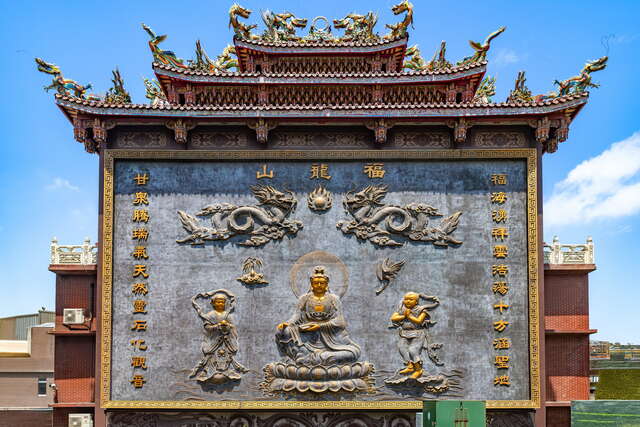
Ganquan Temple, located in the Guanyin District of Taoyuan City, is not only one of the most legendary religious centers in the area but also a miraculous architectural marvel that combines the beliefs of Confucianism, Buddhism, and Daoism. This grand temple, which has been renovated over a century, attracts devotees and travelers with its exquisite architectural style and rich cultural connotation. The origin of the temple is linked to the miracle of Ganquan Well. Ganquan Temple was formerly known as Fuliong Temple, which dates back to the Qianlong period of the Qing Dynasty (1780), when a farmer discovered a stone resembling Guanyin (the Goddess of Mercy) and began to worship it as the "Stone Guanyin." Later, due to the miraculous spring water that cured various ailments, the temple's name was changed to Ganquan Temple, and the neighboring Ganquan Well, which remains clear and abundant to this day, has become a highlight for pilgrims. Ganquan Temple is distinguished by its three distinct levels, each dedicated to different deities, including Stone Guanyin, the Jade Emperor, and Yaochi Jinmu, totaling 18 statues. The temple architecture employs a traditional palace-style structure, with intricate carvings of divine beasts and figures on the ridge decorations. The 12 winding dragon columns are majestic, and the copper sculpture of Guanyin, towering three floors high, is a rare sight in Taiwan. The temple hosts three major annual festivals that beautifully blend faith and local culture, including the Birthday of Guanyin, the anniversary of the Stone Guanyin's emergence, and the Zhongyuan Festival celebration. These festivals merge tradition with modernity, featuring events from beach clean-ups to Hakka cultural performances, revitalizing ancient religious activities. Rich decorative arts are omnipresent inside and outside the temple, from stone lions with beads in their mouths and stone carvings of the Four Heavenly Kings to the historically significant century-old plaques and painted murals, all narrating the deep connection between Ganquan Temple and local beliefs. Visiting Ganquan Temple is not only a journey into traditional culture but also a cleansing of the soul. Here, history, architecture, and faith beautifully converge, awaiting exploration by travelers.