Red Coral Stone Weir & Fish Stove Introduction
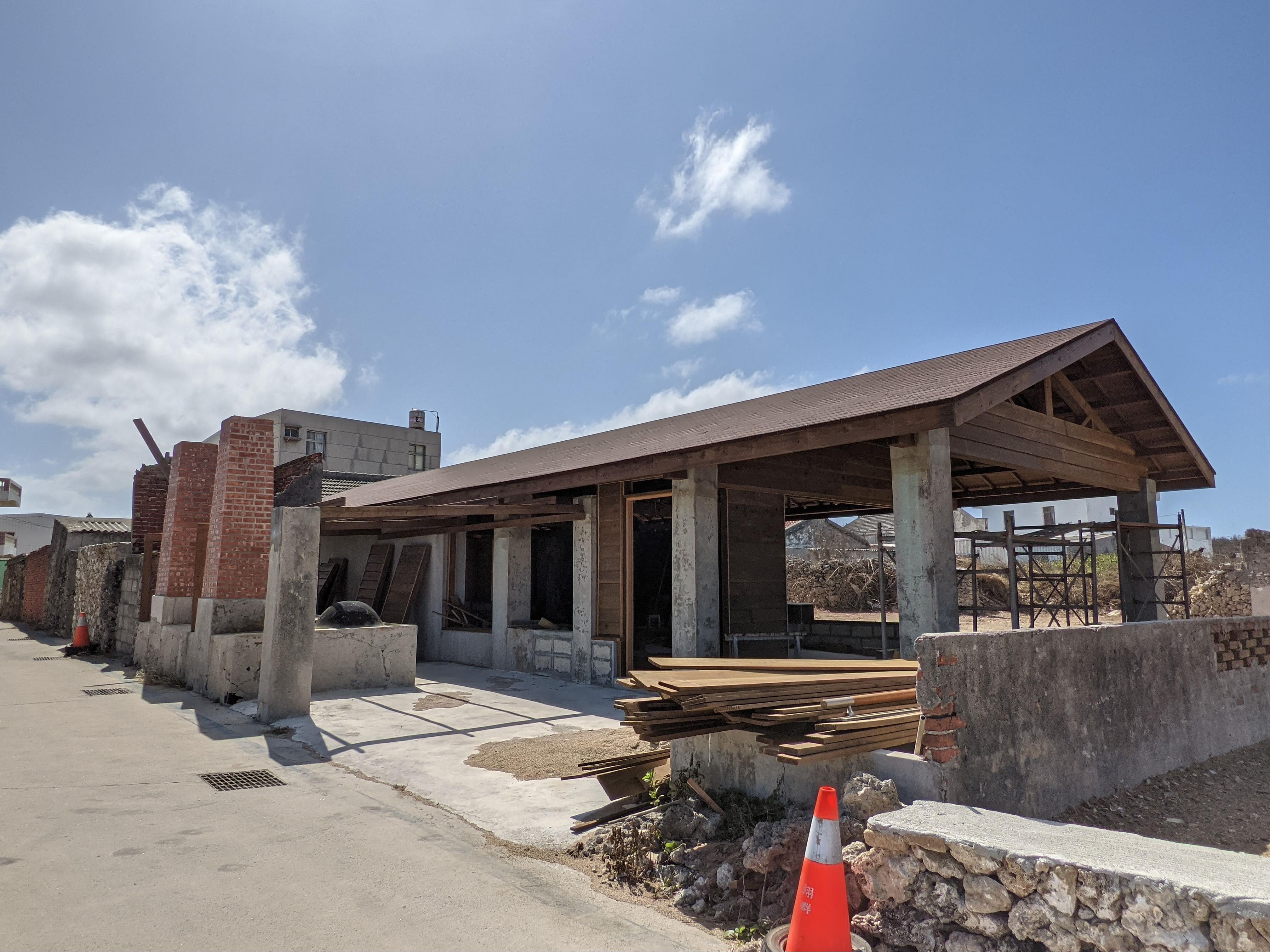
Honglu Village, located at the bottom of Honglu Bay, has ten stone fish traps, most of which existed during the Qing Dynasty, while some were built during the Japanese occupation. Among them, three stone traps are over 300 meters long and are classified as double stone fish traps, while the largest stone trap, known as Dahu, spans a total length of 1375 meters, making it the largest stone fish trap in Penghu County. In the early days, when fishery activities in stone traps were still thriving, there was a custom of offering prayers to seek the safety of fishermen and a bountiful catch. This ritual, known as "Bai Hu", would involve preparing sacrificial offerings on specific days, such as the inauguration of the traps, days of abundant catch, as well as the first and fifteenth days of the lunar month. Offerings such as sacrificial animals would be prepared, along with cooking vermicelli and fresh fish on-site to reward everyone. The trap owners would also prepare and distribute two half-kilogram red turtle cakes to shareholders. In the 1960s, during the peak of traditional fishery in Penghu, each fishing port or nearby village had "fish kitchens" for steaming, drying, and processing fish. When fishing boats returned to port, fishermen would bring their catches, such as small squid and clams, to the fish kitchens, where they would soak them in saltwater and clean them. Then, the fish would be placed in round bamboo sieves, steamed in pots with water for a few minutes, and then spread out on the roadside or open spaces for drying. Once dried, they could be boxed and sold to Taiwan's main island or exported to Japan. However, as the fishing industry in Penghu declined, the traditional fish kitchens have gradually faded into history.