Tainan Xinhua Life Story Museum (Xinhua Old Street) Introduction
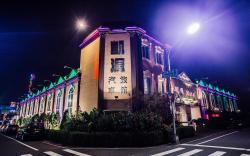
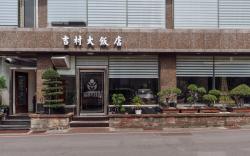
Xinhua, formerly known as "Damujiang," means "land of mountains and forests" in the Siraya language. This area boasts the beauty of mountains and forests, as well as a rich cultural and historical background. In the early days, Xinhua was an important trade hub for interactions between the mountains and the plains. During the Dutch era, there are historical records of port trade, which evidence the thriving scene of Xinhua at that time. However, since the Japanese occupation, Xinhua has been a significant political and economic center in the Greater Tainan area. In the first year of the Taisho era, Xinhua was designated as Xinhua Street under the administration of Tainan Prefecture, and the Xinhua County Office was established to oversee nine townships including Xinhua Street, Shanhua Street, Zuochen Township, Nanhua Township, Yujing Township, Nanshi Township, Shanshang Township, Xinshi Township, and Anding Township. Xinhua Street is located at the center of these nine townships, which has allowed it to preserve many cultural and historical legacies. The old streets of Xinhua remain a historically rich area of cultural significance, featuring various cultural assets such as the street office, martial arts hall, Japanese-style dormitory group, and the Feng'an Temple scattered throughout the old town communities. Also notable is Xinhua Old Street, which features Art Deco architecture that was popular in the 1920s and 1930s, and has been listed as a potential cultural asset by the Tainan City Cultural Bureau. Each building carries a century-long history of important developments in local industries and their connections to community life, exemplified by the century-old rice store—Jinfah Rice Store, whose fourth-generation owner, Mr. Yang Zhenzong, took on a stabilizing role in the turbulent post-war years by offering farmers purchasing prices above market value and lending to impoverished farmers for necessary materials, to be repaid with harvested rice. His efforts helped many poor farmers ride out hard times, and this story is still cherished by many farming families in the area. Each historical building in Xinhua Old Street thus conveys the changes in traditional industries across different eras, allowing the public to reflect on the living conditions of the past and the paths walked by their ancestors, and it serves as a rich source of cultural education material. Moreover, Xinhua is also the birthplace of Taiwan's sugar industry. In the early 20th century, the Japanese conducted studies on the land, hydrology, and climate of Taiwan, and established the "Damujiang Sugar Experiment Station" at what is now the location of Xinhua Senior High School. By 1921 (10th year of the Taisho era), it was incorporated into the Ministry of Agriculture, officially named the "Agriculture Department of the Central Research Institute of the Governor-General of Taiwan," serving as a key center for sugar development in Taiwan (the historical site of the Taiwan Sugar Corporation in the southern district of Tainan is a relocation from this experiment station in 1933). One of the reasons for its establishment was that Xinhua had Taiwan’s first reservoir—Hutoupi, which channeled water to the experiment station, positioning Xinhua in a key historical role and directly and indirectly contributing to the prosperity of Xinhua Old Street. In light of the above, this cultural base is called the Xinhua Life Story Museum, meaning that every historical building and old house acts as an exhibition area of the museum. After our team has gradually renovated, preserved, and revitalized these old houses, their stories will be embedded within the spaces, allowing connections between the old houses to create a wall-free museum-like district, shaping the unique cultural features of Xinhua Old Street and making it an important cultural education base in Taiwan.
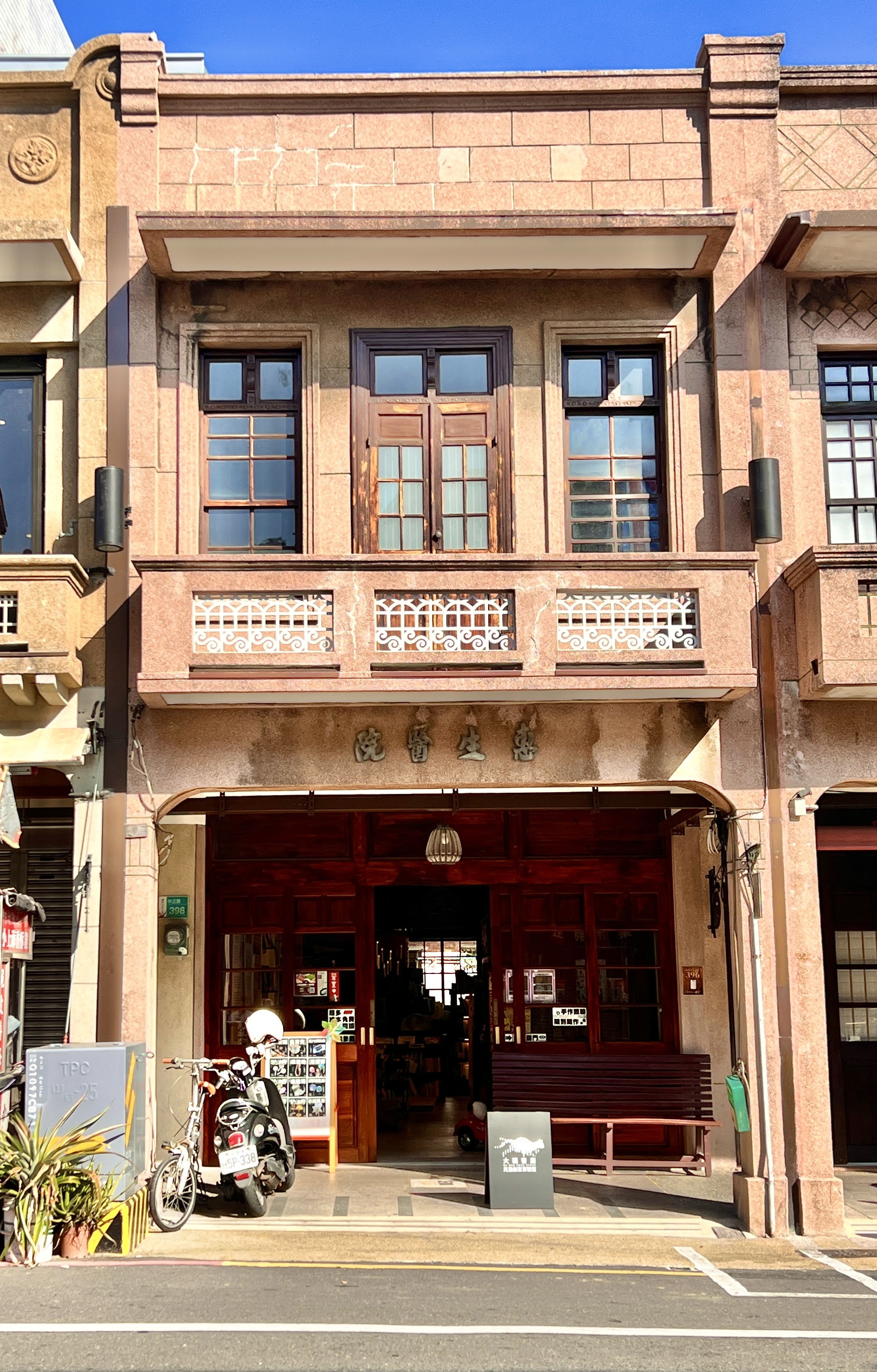
 The main base is an independent bookstore - Big Cat Bookstore.
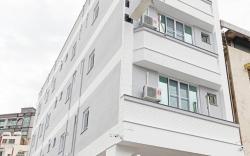
 Facade landscape 1 - A corner of the east street