Fengyuan Lacquerware Museum Introduction
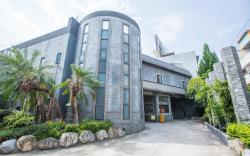
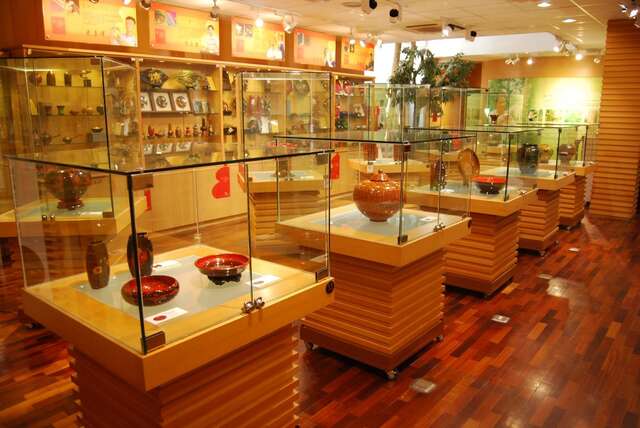
The Lacquerware Museum is Taiwan's first public lacquer art exhibition hall. The development of lacquer art in Taiwan can be traced back to the Japanese colonial period, when Taichung City, with its large Xueshan and Baishan forests, provided the materials needed for lacquerware craftsmanship. Additionally, the Japanese had a planned cultivation of the lacquer industry in the central region, which produced a number of lacquer artisans. This combination of favorable geography and skilled labor led to the prosperous development of the lacquer industry in Taichung City. Around the 1950s, with funding from the United States and technology provided by Japan, the "Milpark Ro Factory" was established in Fengyuan specifically for the production of salad bowls that lie between wooden and lacquered ware. Subsequently, many lacquer artisans started their own businesses, and by the 1960s and 1970s, there were over 40 lacquerware shops locally. This period also marked the golden age of exports to Japan, with most lacquerware being exported from the Fengyuan area, turning Fengyuan into a hub for lacquer art in Taiwan. Today, with the globalization of industries and the shift in manufacturing focus, Fengyuan's lacquerware is transitioning from mass production to refined craftsmanship, continuing the spirit of innovation and inheritance. Therefore, the establishment of the Lacquerware Museum represents a driving force for the innovation and regeneration of lacquer art. The museum is located in the beautiful Zhongzheng Park, with the first floor featuring an exhibition area and workshop that displays historical materials on lacquer craftsmanship and works by renowned artists. The second floor mainly serves as a local cultural industry exhibition room and a workshop classroom, aimed at supporting teaching and learning activities for skill inheritance. Thus, the Lacquerware Museum provides not only static exhibitions but also educational, industrial, cultural, and recreational functions as an intellectual space. We have various simple DIY courses available, such as making seed necklaces and bird whistles using the changing lacquer technique, and imprinting leaf vein patterns onto lacquer trays with the maki-e technique, followed by personal creative work. Opening hours: Tuesday to Sunday, 09:00-17:00. Address: No. 1-1, Shuiyuan Road, Fengyuan District, Taichung City. Contact number: 04-25130177. Guided tours: ■ Yes □ No ■ Reservation required. Reservation phone: 04-25130177. Other services: ■ DIY experience: Lacquer 4-inch trays, necklaces, bird whistles, chopstick DIY courses. Text and images provided by Taichung City Industrial Story Museum Development Association.