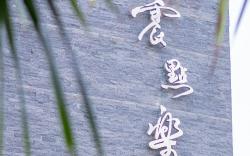
Ulsan Dik Mud Volcano Natural Reserve Introduction
There are 27 mud volcanoes around the world, and the deep water farm in Shen Shui Village, Yanchao District, is the place in Taiwan where mud volcano activity is most developed, covering an area of 3.88 hectares. To protect this unique landscape, the Council of Agriculture designated this area as the "Wusanting Mud Volcano Natural Reserve" in 1992. The formation of mud volcanoes is caused by the shifting and fracturing of the Qishan Fault beneath the earth's crust, allowing water to seep underground and mix with mudrock to form slurry. High-pressure gases then push the slurry to the surface through cracks, forming mud volcanoes. This area features three conical mud volcanoes, with the tallest reaching 3.5 meters in height and a slope of about 50 degrees, making it a typical mud cone. Eruptions occur every few seconds, with thick slurry flowing down the cone's surface, forming tongue-like flows that can spread over a diameter of 70 meters. Mud and gas are frequently ejected, and these gases can often be ignited or spontaneously combust. For educational and academic purposes, visitors wishing to enter the natural reserve must fill out an application form, allowing them to observe the valuable badlands topography, mud volcanoes, and natural ecology.