Chiayi City Museum of Art Introduction
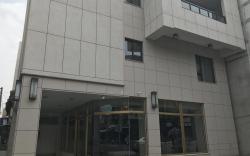
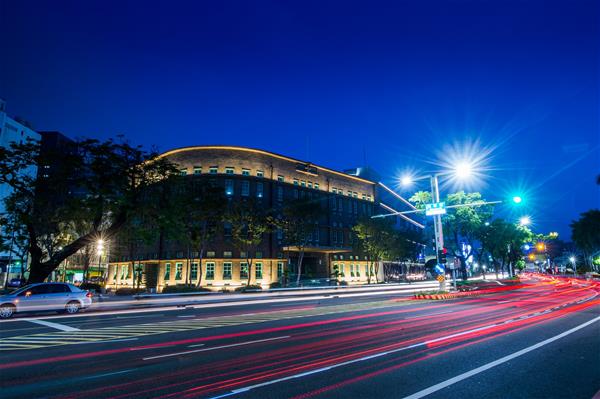
The Chiayi City Museum of Art (Jia Mei Guan) features a distinctive architectural design that can be divided into two areas: the historical building and the main museum. The historical building is a designated historical site from the Japanese colonial period, originally serving as the Chiayi branch of the Tobacco and Alcohol Monopoly Bureau. The tobacco and alcohol monopoly industry in Taiwan was established in the 33rd year of the Meiji era (1900), with the establishment of the Taiwan Governor-General's Office Monopoly Bureau, and the Chiayi branch was founded in the 13th year of the Taisho era (1924). This building was constructed in the 11th year of the Showa era (1936) and designed by the engineer Meizawa Shigejiro, who was then working for the Bureau. The Chiayi branch oversaw the tobacco and alcohol monopoly operations in Yunlin, Chiayi, and Tainan, making it significant as a witness to the history of the industry. The main building includes the historical site constructed in 1936, a liquor warehouse built in 1954, and a tobacco product warehouse built in 1980. The architectural style combines the simplicity of modern architecture with characteristics from the era of significant tile usage. The exterior corners of the building are curved, the base is elevated, and the windows and window sills form a horizontal band. The facade is adorned with SCRATCH-style tiles produced in Beitou, serving as a testament to the evolution from classical architectural styles to modernist architectural styles. Notably, the design of the columns at the staircases on the first and second floors, which feature eight-sided angles, is a visual focal point in the space. The renovation was led by architect Huang Mingwei and his team, who adopted the internationally recognized CLT (Cross Laminated Timber) construction method in recent years, using engineered wood beams and columns instead of steel in the lobby space. This approach contributes positively to environmental protection and architectural transformation, and responds to Chiayi's historical and cultural identity as the "Wood City."