Wazihwei Wetlands Introduction
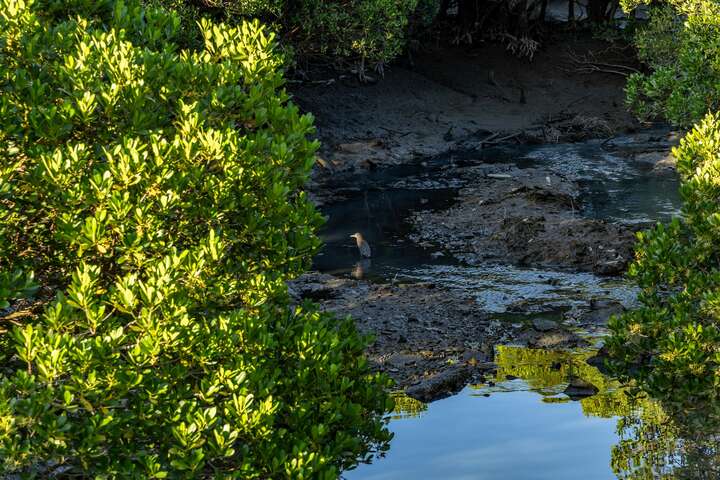
Wazihwei Natural Ecological Reserve is a sprawling 30-hectare ecological protection area. It is named "Wazih" due to the curved terrain of its estuary. The lagoon-like topography provides an excellent growth environment for mangroves, making it the largest mangrove area on the left bank of the Tamsui River. The main conservation focus at Wazihwei is on the water mimosa and the accompanying flora and fauna. The most beautiful scene in the area is the lush green water mimosa and the blue boats resting on the beach. In addition to the water mimosa, exploring the mangrove wetland ecology at Wazihwei allows visitors to observe precious wetland ecosystems, including various estuarine plants such as mangroves, saddle vines, and reeds. During the daily tides, various organisms, such as mudskippers, fiddler crabs, sea snails, and barnacles, can be seen; this place is also an important site for bird watching in northern Taiwan during autumn and winter, hosting numerous species of migratory and resident birds. The coastline promenade provides a great vantage point to view Guanyin Mountain. Wazihwei Natural Ecological Reserve serves as an excellent natural geography classroom, featuring bike paths for cycling along the scenic route, with many informational signs on natural ecology, making it educationally significant. It is common to see families and children visiting to gather materials for their school assignments. Walking into the northern part of Wazihwei along the coastline promenade offers a panoramic view of the Bali Water Sports Center, Guanyin Mountain, and Tamsui.