Taichung Port Art Center Introduction
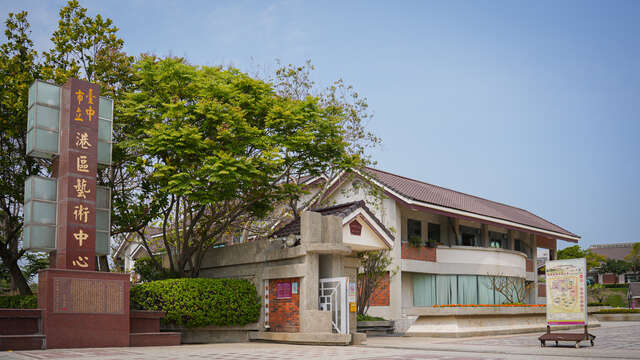
The Taichung City Port Art Center is located in the Qing Shui District, nestled between the mountains and the sea, built on a series of artificial hills and flat land. The architecture is designed in a traditional Minnan style, exuding a classic and elegant charm. It serves as a multifunctional complex for artistic exhibitions and performances, with a total area of approximately 3 hectares, primarily divided into exhibition halls, a performing arts hall, an artist information center, a conference hall, an outdoor theater leisure area, a workshop area, and administrative offices, boasting comprehensive facilities. In addition to providing a stage for cultural and artistic performances and a gathering place for public leisure, it actively addresses the inherent shortcomings of its peripheral geographical location, making it a core venue for national artistic exhibitions and performances. Taichung City's geography is long and narrow from east to west, making the distribution of local cultural resources challenging. To effectively promote arts and culture comprehensively, the Taichung City Port Art Center was established in 1993 and officially began operations in March 2000. The center is situated in the culturally rich Qing Shui District, bordered to the east by Aofong Mountain, adjacent to Taichung Port to the west, and next to the Dajia River to the north, built amidst the undulating artificial hills and flat land, interpreting the overall space as "courtyard space." The architecture, designed in the style of Minnan courtyards, also embodies the traditional aesthetic of scholarly institutions, appearing classic and elegant. The exhibition hall has a total area of about 3,000 square meters, conveying the concept of "seeking art." With an entrance about the size of a home door, it creates a welcoming atmosphere, allowing the public to feel at home while utilizing public resources. It mainly comprises Exhibition Room A (approx. 1,800 square meters), Exhibition Room B (approx. 750 square meters), Exhibition Room C (approx. 280 square meters), a central gallery, the Qing Shui Hall, the Ju Yue Hall, a second-floor exhibition area, and an atrium square, frequently hosting exhibitions of paintings, calligraphy, photography, sculpture, ceramics, and cultural artifacts. The art workshop includes four classrooms named "Spring Rain Workshop," "Summer Lotus Workshop," "Autumn Moon Workshop," and "Winter Sun Workshop," equipped with excellent audio-visual facilities and movable seating, providing a complete learning environment for artistic workshops and family activities during holidays. The performing arts hall covers an area of approximately 1,800 square meters, featuring a distinctive white membrane roof shaped like a conical hat, making it the center's most iconic building. The stage is designed in a proscenium style, with a total of 546 seats in the audience area. It also has a rehearsal room for bands and a rehearsal studio for dance, serving as a multifunctional medium-sized venue primarily for music, supplemented by drama and dance performances. The outdoor theater leisure area comprises a series of open performance spaces, including the Art Square, Qing Shui Square, Rotary Square, Totem Square, Melon Shed Square, and Elegant Book Gallery, suitable for local operas, outdoor concerts, and cultural plaza activities on holidays. Qing Feng Building is a two-story Minnan-style building that supports artistic creators in realizing their artistic dreams and promotes a space for aesthetic living. Since 2013, Qing Feng Building has been open for application by artists. During their residency, visitors have the opportunity to closely observe the process of artistic creation. Guided tours: ■ Yes □ No ■ By reservation. Online reservation: https://tcsac.taichung.gov.tw/Service/Tour_Apply