Cihans Temple Introduction
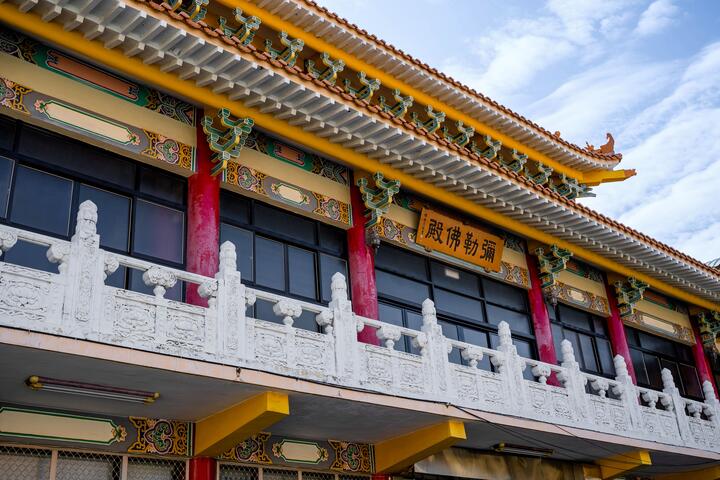
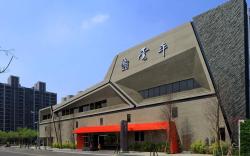
Taichung Compassion Temple, known throughout Taiwan, was originally established as Compassion Hall in the 18th year of the Guangxu era and is one of the Buddhist venues in Taichung during the late Qing Dynasty. After the recovery of Taiwan, when Japanese sects withdrew from Taichung, Chinese Buddhism began to take root. The Buddhist community in Taichung entered a new phase. In 1955, Compassion Hall was renamed Compassion Temple. Under the successive abbotships of Masters Shan-Zhi, Lu-Hang, Guang-Hua, and Zhen-Guang, the temple's affairs gradually flourished. The temple has a long history; it was founded in the fifth year of the Republic of China during the Japanese occupation by local figures such as Lin Tong. After Taiwan's recovery, Master Lu-Hang began to reform the temple, establishing a strong foundation emphasizing precepts and chanting. In 1963, Master Zhen-Guang took over as abbot, vowing to renovate the old temple. Through extensive fundraising efforts, he completed projects such as the Main Buddha Hall, the Elderly Care Center, and the Huazang Pagoda, marking the temple's growing scale. In 1971, the first National Buddha Precept Ceremony was held, a significant event in the Buddhist community characterized by a solemn and grand ceremony. In 1984, Compassion Temple underwent another renovation, expanding lecture halls, dining halls, and living quarters. After two decades of effort, Master Zhen-Guang implemented innovations, and the magnificent Compassion Temple became a well-known landmark in Taiwan. In 1991, Master Hui-Kong established the Taichung Compassion Temple Cultural and Educational Foundation to create a Buddhist academy and the Taichung Guanyin Line, joining the community service sector with a spirit of compassion. In 1998, the "Taichung Compassion Temple Foundation" was established; from 2001, Master Hong-Can took over as chairman, promoting temple affairs and fostering cultural activities in the community. The architectural grandeur of Compassion Temple, coupled with its elegant gardens and tranquil environment, has made it a popular sightseeing destination in the Beitun District. In recent years, under Master Hong-Can's leadership, the temple has actively engaged with the community, promoting courses in calligraphy, piano, and flower arrangement, embodying a spirit of connection with the public.