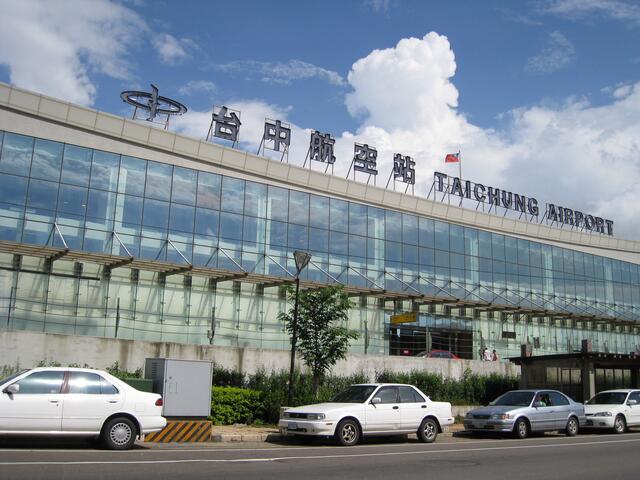
Taichung International Airport Introduction
In order to provide travelers with a better flight environment and to advance toward the goal of becoming an internationally standard airport, while responding to global concerns about environmental issues, the new international terminal officially opened on April 11, 2013. It incorporates energy-saving and carbon-reduction concepts in its design, merging smooth traffic flow with spatial planning to create a compact yet internationally-scaled atmosphere. It meets various criteria for daily energy conservation, carbon dioxide reduction, waste reduction, indoor environment quality, water resources management, and sewage improvement, obtaining a gold-level certification for green buildings. The new international terminal has an annual passenger service capacity of 1.7 million, which, combined with the existing terminal, increases the total annual service capacity to 2.9 million. The types of aircraft operations have also upgraded from Category 4C aircraft (such as the B737-800, which seats about 150 passengers) to Category 4D aircraft (such as the B757, which seats about 200 passengers). To enhance the quality of service for the public and create sustainable business opportunities with diverse service objectives, during the construction of the international terminal, Taichung Airport commissioned private organizations to facilitate the involvement of the private sector in public infrastructure without engaging public authority. It combines international and local cultural characteristics and offers various duty-free shops, dining options, beauty convenience stores, local cultural artifact exhibition halls, 3C products, audiovisual and bookstore services, as well as traveler consultation desks, mobile customer service personnel, landscape relaxation areas, internet services, children’s play areas, shopping luggage carts, green walls, cultural galleries, massage chairs, and baby strollers, among others. This aims to promote the unique qualities of Taiwanese industries and the development of the tourism sector, creating social and economic benefits. The market area served by Taichung International Airport encompasses not only Taichung, Nantou, and Changhua administrative regions but also extends north to Miaoli and south to Yunlin, with a population of around 6 million people, providing the fundamental source of passengers for the airport. In response to the increasing aviation demand from residents in the Central Taiwan urban area, several airlines are stationed at the airport to provide flight operations. For the latest stationed airlines and flight routes, please refer to the official airport website. Taichung International Airport officially began providing international air cargo services on February 5, 2015, initially offering a handling capacity of approximately 8,600 tons of cargo annually. This enhances convenience for local cargo owners to conduct import and export business near the airport, fulfilling the role of international passenger and cargo service. The aim is to provide comprehensive and thorough services, developing toward the goal of "passenger and cargo operations advancing together," while continuously maintaining the operational philosophy of "flight safety, complete facilities, and service satisfaction," positioning itself as a key gateway for socio-economic development in Central Taiwan.