Lai Lai Ju - Tao Mi Academy Introduction
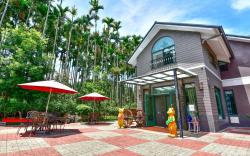
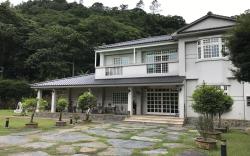
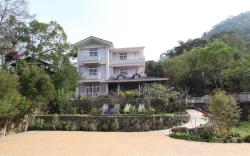
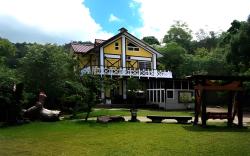
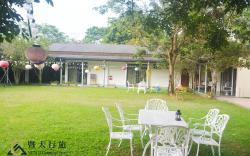
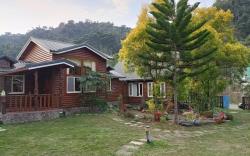
Peimo Academy, a center for the preservation of Taiwan's traditional rice culture, is a brick house with red tiles that has quietly stood in the Peimo community for nearly half a century. Cheng Guoming, who has operated the Lilai Restaurant serving handmade udon in Taichung for 20 years, was appointed as a part-time lecturer at National Chi Nan University in the Department of Leisure and Hospitality Management in 2011, and he fell in love with the beautiful surroundings of Puli. In early December 2012, guided by local villagers, Professor Cheng discovered this dilapidated old house located at No. 1, Zhuanggua Road, Peimo Village. He recalls, “The state of the old house was beyond words; not only did it lack doors and windows, but the inside was filled with debris. Due to severe roof leaks, plants and small trees were scattered everywhere indoors. The cement ground in the yard was long occupied by weeds; the low brick walls in the backyard had collapsed and were impassable; the rain cover on the side had completely fallen down. At that time, my friends all advised me that tearing it down and rebuilding was the best option!” Standing in front of the old house today, it is hard to connect with Professor Cheng’s memories, as he has surely put immense effort into restoring the Peimo Academy. As the first person dedicated to passing on the techniques of Taiwanese handmade udon, Peimo Academy not only regularly provides reservation-based experience services but also is the first to publicly teach the craft of making handmade udon in Taiwan. Over the past decade, countless free udon-making classes have been held across Taiwan, including two volunteer teaching sessions at "Nai Zi Ren ㄟ Store" outside Hualien Fengtian Station. What does a rural landscape look like? Brick houses, red tiled roofs, open courtyards, old stoves for burning materials, the scent of seasonal flowers, and the laughter of residents—this is the everyday life at Peimo Academy. A small rice field has been set up in front of Peimo Academy; “When I was a child, the rice field in front of my house was the liveliest place! Besides being a playground for my six siblings, we would dry our rice in spring and autumn, dry Mino melons in midsummer, and dry radishes before the New Year….” This is Cheng’s beautiful childhood memory. Since 2014, Peimo Academy has often invited community partners to hold dining events and market activities in this small rice field, bringing students from National Chi Nan University to share his expertise and joy. Professor Cheng, who was born in a rural Sanheyuan, has a deep affection for old houses. The various rice dishes made during festivals, such as red turtle cake, taro cake, radish cake, zongzi, and even steamed buns, are happy memories accompanying him by his mother’s side, and are an important reason for the establishment of Peimo Academy.“These traditional snacks, which used to be seen during Taiwanese festivals, will eventually become a world heritage (a forgotten heritage) if they are not passed on and recorded!” Establishing a learning space for Taiwan's traditional rice culture has become Professor Cheng’s important mission in life! In addition to traditional rice dish making, Peimo Academy continues the operations of Lilai Restaurant for 20 years, offering a two-hour handmade udon-making experience as a primary service. Using Ai Lan spring water sourced from the Pu Li Shaoxing wine and flour, through the processes of kneading dough, stomping, rolling, and cutting, participants create fresh and chewy noodles that will refresh your perception of noodles. If you have ample time, you can stay in the old house for one night to gain deeper learning through a 15-hour noodle-making experience. The current experience activities at the "Peimo Academy" include traditional rice dish (cake) making, taro balls and sweet potato balls making, and coffee bean roasting experiences; seasonal activities include harvesting sweet dragon bamboo shoots, hibiscus flowers, and coffee farm tours. Guests are welcome to gather and make reservations for the "Dining in the Yard" program. "Dining in the Yard" is an activity where participants personally cook dishes themselves, making it the best choice to taste the local flavors of Puli; this four-hour experience combines handmade noodle making, a tour of the Paper Church park, a visit to an ecological village coffee farm, hibiscus flower bun making, old stove cooking, and more, which is very popular among tourists.