Ma'ao Bay Introduction
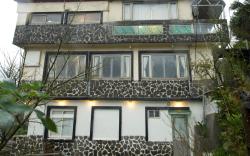
The most distinctive feature of the fishing village is the "stone houses," which are the best examples of using local materials. Sandstone, bamboo, and thatch are all elements used in construction. In the early days, villagers would help one another to build these stone houses. Typically, one can tell the economic status of the homeowner by the elegance of the stonework and the style of the masonry, which is quite interesting and varies in characteristics and aesthetics. In Ba'ao, the sea is in front and mountains are behind, with three streams converging here before flowing into the sea. When viewed from above, the three streams resemble the character "卯" (Măo), hence the name. Due to the unique topography of Ba'ao, the coastal areas are diverse, with abundant marine biological resources suitable for the growth of sea cucumbers, lobsters, stone algae, and various marine organisms, which serve as the primary economic sources for the local community. The fishermen living in this area retain traditional fishing techniques and the culture of "ama" (female divers), and it is common to see them drying seaweed in front of their homes or in the square. Visitors can also experience cultural tours of the fishing village, DIY stone jelly, tidal ecology observations, and local delicacies, providing a deep understanding of the traditional fishing village's wisdom and the local maritime culture. Travelers who enjoy exploring local characteristics might consider a journey to this hidden fishing village, cycling along the old Caoling circular line into the village, and experiencing the tranquility and simplicity of this small yet beautiful place while feeling its enchanting charm that is beyond worldly concerns, enjoying a relaxing and comfortable time of serenity.