Erjie Wang Gong Temple Introduction
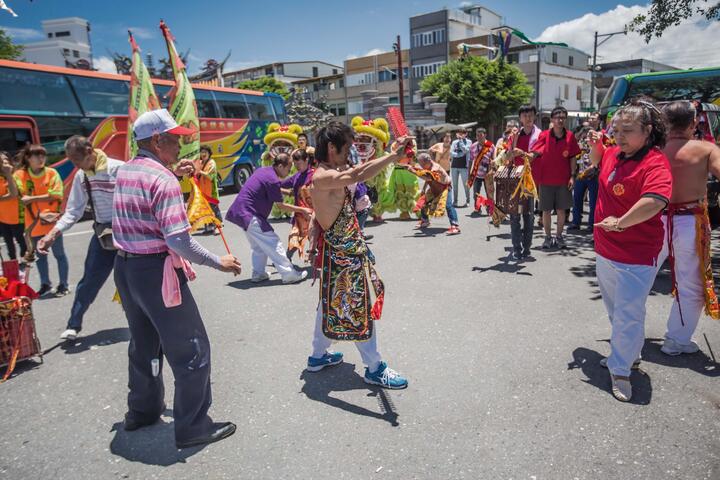
Erjie Wang Gong Temple has a history of over 200 years, originally named Zhen'an Temple. It has hosted a historically significant event involving the relocation of the temple with the participation of a thousand people, demonstrating the local residents' importance placed on the Wang Gong Temple. Today, a new temple has been built beside the old one, which has been transformed into the Erjie Township Cultural Center, housing ancient artifacts used for rituals, intricately carved beams and columns, and temple history, making it an important cultural asset in Yilan. The main deity worshiped at Erjie Wang Gong Temple is the Three Kings of Gu Gong, who were leaders of the righteous forces resisting the Mongolian invasion during the Southern Song Dynasty. They arrived in Taiwan during the Qing Dynasty with the people who crossed the sea and are honored in what is now Erjie Township in Yilan County. An elaborate birthday celebration is held annually on the 15th day of the 11th lunar month. Among the rituals, the fire-walking ceremony is the largest folk event of its kind in Taiwan. Hot charcoal is sprinkled with salt and rice, and believers carry the palanquin of the deity, walking barefoot on the steaming charcoal as part of a ritual to remove misfortune and seek blessings. In addition to fire-walking, there are other ceremonies such as the Child Pilgrimage and giving thanks for the protection of various deities from above. These rituals carry local characteristics and religious significance of purification, and they promote traditional folk arts such as music and opera as part of a cultural festival, attracting people from various regions to participate in this grand religious celebration.