Fengshan Temple in Lukang Introduction
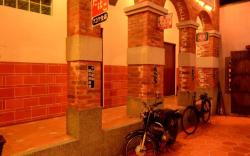
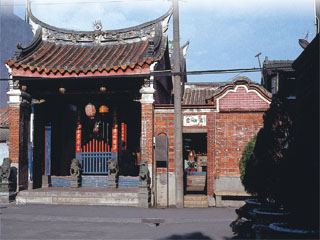
Fengshan Temple, a county-designated historic site in Quanzhou, is dedicated to the worship of Guangtze Zunwang. The original temple is located in Fengshan Temple, Nan'an County, Quanzhou. Immigrants from Nan'an brought the incense and offerings to Lukang after building the temple, which was subsequently named Fengshan Temple. The temple was established in the second year of the Daoguang reign (1822) and was expanded in the tenth year of Daoguang. Initially, it was a long-shaped temple, but due to road widening, the courtyard was dismantled, and the San Chuan Hall was relocated, resulting in its current appearance. The left and right sides of the San Chuan Hall still show traces of the seams, which visitors can observe closely. It is said that Guangtze Zunwang, also known as Bao'an Zunwang, as well as King Guo Sheng, Lord Guo, and various other names, is the most revered deity by the people of Quanzhou. In the courtyard, there are inscriptions written by the successful candidate Liao Chunbo and the esteemed scholar Chen Huaicheng, which hold significant literary value. The left wing is the former site of the Beiguan ticket booth, now only retaining the plaque "Yuru Yi," and it also enshrines the lord of the Su Mansion from Wanchun Palace. The dragon and tiger walls on both sides in front of the San Chuan Hall and the murals in the courtyard are made of jackfruit ceramic, filled with ancient charm. The temple is elegant, and the artifacts are precious, making it worth a visit.