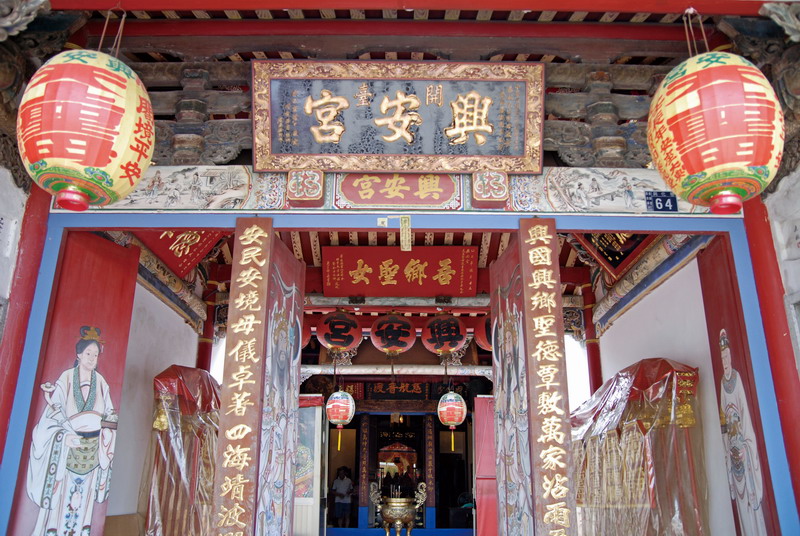
Xing'an Temple Introduction
Xing'an Temple, commonly known as Xinghua Mazu Temple, is one of the earliest Mazu temples in Lukang. In the 23rd year of the Kangxi era (1684), immigrants from Xinghua Prefecture in Fujian Province brought Mazu's incense to Taiwan and built the temple in the area of Lukang Caotzai Market, naming it "Xing'an Temple," which means "peace of Xinghua" and "tranquility of Xinghua." Xing'an Temple is one of the community temples in Lukang, a term referring to temples built by a specific group of immigrants from China, which also serves the function of a "hometown association." In its early days, Xing'an Temple was a worship site for the people of Xinghua, and because the number of worshippers was limited, the temple was not renovated, allowing it to retain its original layout. On November 8, 1848, a earthquake occurred in Changhua, causing damage to Xing'an Temple. In the second year of the Xianfeng era (1852), nine directors, including Xu Xilin, Zhou Wenquan, Su Daisheng, and Xiao Rixin, all from Xinghua, advocated for its reconstruction, which established the current architectural layout of the temple.
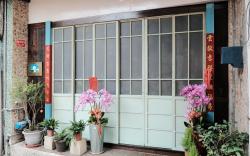
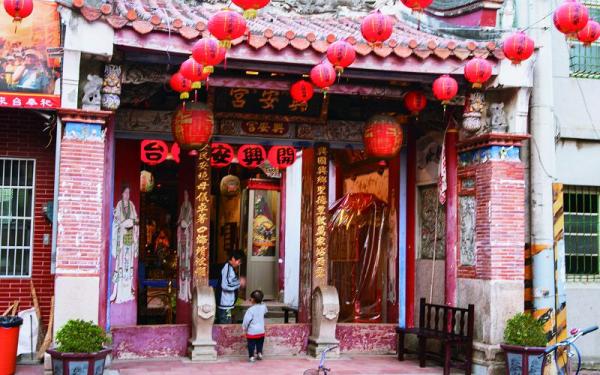 Xing'an Temple Outer Area