Yongji Cai's Traditional Oyster Omelette Introduction
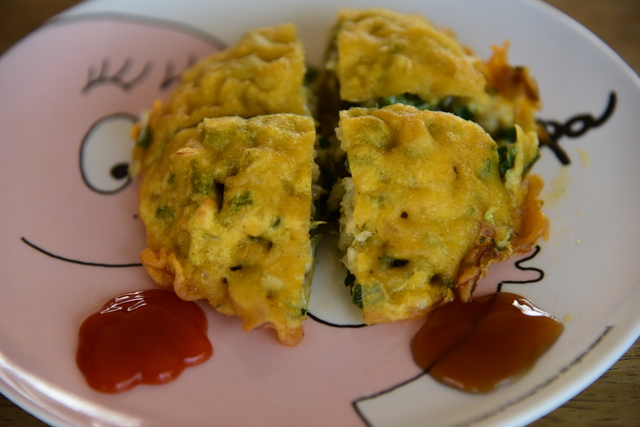
Tsai Tsung-hsien (born in 1972), a native of Longshan, rents a fish pond from the farmers' association to raise clams. Raising clams is not very demanding, relying on seawater and feed. Clams need to be cultivated for 8-12 months before they can be harvested, during which there is no income. Therefore, he has set up a stall to sell oyster omelets to supplement his family's income. There are no villages nearby, and the customers are mainly passing tourists and truck drivers. Tsai's traditional oyster omelet is inspired by the earliest oyster omelet stall in Longshan, named Jiaozi Oyster Omelet. The batter consists of: yellow bean flour, wheat flour, crispy flour, and rice flour; the filling includes: cabbage, leeks, celery, and pickled vegetables. The use of pickled vegetables gives it an old-fashioned flavor, which is why the store is named "Tsai's Traditional Oyster Omelet." Oyster vermicelli is also a signature dish of "Tsai's," made with handmade vermicelli, shallots, chive flowers, sesame oil, and oysters. The preparation involves simmering milkfish bones and pork bones for a long time to create a broth. The vermicelli is blanched and set aside. The broth is brought to a boil in a small pot, along with shallots, chive flowers, and oysters, then cooked until done. It is poured over the vermicelli, drizzled with sesame oil, and served. In addition to oyster omelets and oyster vermicelli, they also sell milkfish belly soup, milkfish skin soup, and milkfish sausage. The clam cultivation must be done in conjunction with milkfish to eat the algae; otherwise, the fish pond will be covered in algae during winter, suffocating the clams.