Tamsui Zhongjian Street Introduction
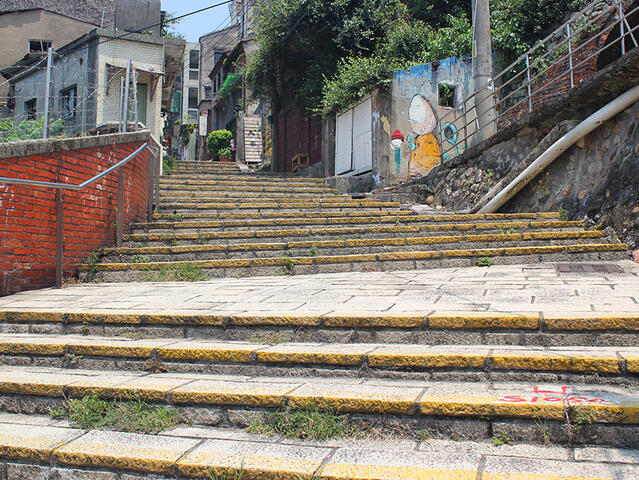
Chongjian Street is the first commercial street in Tamsui, where many notable figures from politics, finance, and education have resided. Originally, it was a historical street stretching 500 to 600 meters, established as a stepped community following the mountain terrain, serving as the main street during the Huwei Street era. From the late 19th century until the mid-20th century, it thrived and is considered the best street for tourists to experience the charm of Tamsui's mountainous town. The true old street of Tamsui is often confused with Zhongzheng Road, which is bustling with tourists. However, Chongjian Street, located directly behind the Fuyou Temple on Zhongzheng Road, is the actual "old" street of Tamsui. It was originally known as Jiukan Street, referring to the nine shops established by Fujian immigrants, and has a history of over 200 years as the earliest developed commercial street in Tamsui. Despite being just one temple away from the lively Zhongzheng Road, it exudes an elegant and calm atmosphere. As one strolls up the stone-paved road, the century-old houses ascend in harmony with the slope. As the commercial function of the area has shifted, Chongjian Street has transformed into a new cultural and creative attraction. The quaint old houses are adorned with vibrant murals, showcasing the historical stories of Tamsui. It's a perfect spot for a nostalgic date in the romance alley created by physician-writer Wang Chang-hsiung and painter Lin Yu-chu, where one can raise their hand to their forehead, alongside the thousand-eye deity on the Fuyou Temple, to gaze at the picturesque scenery of the Tamsui River and Guanyin Mountain, writing their own "If I Were to Open the Window of My Heart."