Artificial Wetland Park Introduction
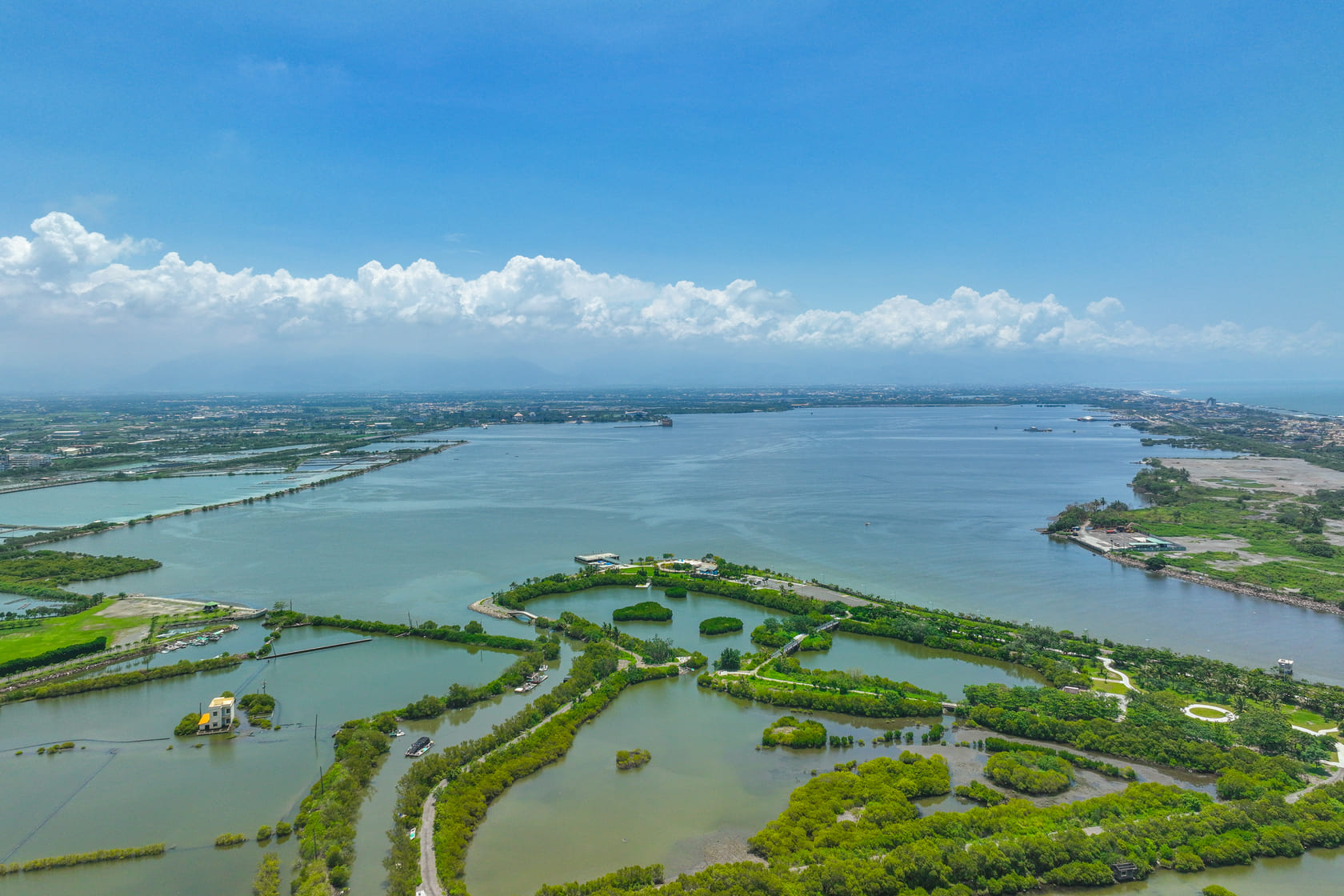
Dapeng Bay has shed its past military usage and the days of extensive oyster farming, and is currently moving towards the development of water-based tourism and recreational activities. To promote water activities, the quality of the water must first be considered. In light of this, the Dapeng Bay National Scenic Area Administration has invested significant effort in long-term water quality monitoring. To improve water quality while restoring the local wetland landscape, a concrete approach has been to utilize the abandoned fish ponds surrounding the bay, transforming them into an "artificial wetland" that requires minimal infrastructure investment, has low operating costs, is easy to manage and maintain, and serves multiple functions such as microclimate regulation and environmental improvement, acting as a wastewater treatment facility. The wastewater treated by the Dapeng Bay artificial wetland system primarily comes from the effluent of surrounding fish farms, which are supplied with water from the seawater of Dapeng Bay. Therefore, the wetland is treating seawater rather than freshwater, making the various wetlands in Dapeng Bay some of the few saltwater artificial wetlands in the country, which is a significant feature. It has been proven that the aquatic plants planted in the wetland environment effectively improve the original ecological landscape of the area, while also increasing the living space for aquatic flora and fauna, enriching and beautifying the aquatic scenery of Dapeng Bay and highlighting its green ecology.
 Artificial Wetland Park
 Wetland Scenery