Zhongpu Jiabin Cultural Hall Introduction
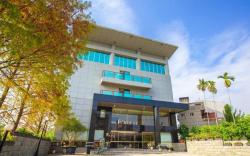
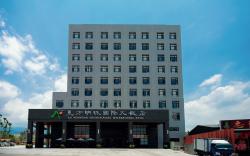
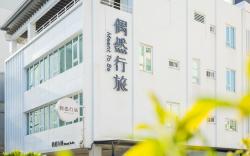
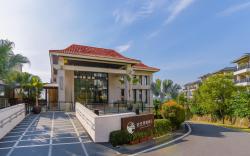
Finding the Identity of Betel Nut from the Chronicles Times change, and the perceptions of things often change and are redefined. In Zhongpu, Chiayi, the hills are still lush with a crop that has a vastly different identity today compared to the past: betel nut. Once an important gift of high status, it is now viewed as a source of disorder and many health issues. The roads throughout the Zhongpu mountains are dotted with betel nut trees, which have been growing for hundreds of years, yet the way it is interpreted has changed dramatically. Opening a Qing Dynasty chronicle of Zhu Luo County, it states that "the local betel nut is of no benefit for hunger or thirst; it is said to alleviate malaria; it is recommended to guests before tea or wine. Neighbors might scorn it; the larger ones are served at banquets, while the smaller ones are used as betel nut. For a hundred coins, it settles the disputes between two families in a day; some things are considered useless but are actually useful, such as this." This passage highlights the significance of betel nut in Taiwan's history, as it has effects against malaria due to Taiwan's humidity and is an important gift for hosting guests and also serves as part of a marriage proposal. The book also includes a picture of indigenous people harvesting betel nut. In the past, betel nut was typically planted in limited quantities in front and behind homes. The records state, "In front of and around the house, betel nut is planted in abundance, with the four societies of Xinyang, Xiaolung, Madou, and Mugaoliwan being the most prominent," indicating it was not cultivated widely. Only in recent decades has there been large-scale farming of betel nut in Taiwan. Why have rural areas begun treating betel nut as an economic crop? Mainly because it requires minimal labor, making it more manageable for an aging farming demographic. Additionally, with Taiwan's economic boom and the demand for labor in construction, chewing betel nut has become a necessity among workers, which has also expanded its cultivation. In the mountains of Zhongpu, betel nut trees stand tall, serving as the economic foundation for its people. However, in the face of the current identity crisis facing betel nut, Zhongpu residents recognize the need for transformation. After all, the beautiful landscapes and rich natural resources in Zhongpu can also be developed into recreational routes for the future. The Jia-Bin Cultural Center: A Little House Welcoming Guests Located along Provincial Highway No. 3 and County Road 135, in the important administrative area of Zhongpu, there stands a small Jia-Bin Cultural Center. Situated near a library, agricultural association, and town hall, it appears rather miniature compared to the many tall buildings around it; it can easily be overlooked. This building was originally constructed as a temporary office after the 921 earthquake in 1999. After completing its initial tasks, it was left unused for a period before being converted into a community activity center for Zhongpu. The original intention was for it to serve as an exhibition and sales center for agricultural products, but due to a lack of cultural spaces in Zhongpu, it transformed into the Jia-Bin Cultural Center. The term "Jia-Bin" not only refers to Zhongpu's round and thriving green gold industry—betel nut—but also implies the meaning of "welcoming guests." It invites everyone to come enjoy introductions to Zhongpu's recreational industry and appreciate special exhibitions held by artists, serving as a platform for exchange where culture can be utilized and transformed in diverse ways. The building may be small, but having a strong sense of community is what truly matters. As a local cultural center, its main focus is on activation and utilization. The Jia-Bin Cultural Center has explored the glory of the industry through old photographs, each image documenting the changes in Zhongpu's industry. It has hosted exhibitions of stone art initiated by local artists Huang Chao-Quan and Luo Bao-Lin, providing a natural touch of greenery. Photographer Hsu Shao-Tang was also invited to return home for an exhibition showcasing the beauty of his hometown through his lens. Moreover, members of the Evergreen Academy have happily exhibited their painting achievements in this space. Although the scale of these exhibitions may be small, they are solidly rooted in the local community. Step by Step Accumulation Starting with gaining local acceptance, the goal is to build a base for regional culture and a place for everyday life, while gradually improving the hardware to also serve as a source of information and services for tourists. A close associate of the Jia-Bin Cultural Center, Hsu Chang-Min, who previously served as the secretary to the township office and director of the Zhongpu Agricultural Association, has a wealth of ideas for the development of Zhongpu, particularly in leisure tourism. Known as "Brother Min," he hopes to integrate Zhongpu's natural resources and industries as part of modern travel. Although promoting this vision requires immense effort and is not easy, we can look forward to the Jia-Bin Cultural Center becoming a beloved local cultural space, while also integrating industry and leisure, evolving into a charming little hub. A Township of Green and Cultural Vitality Whether it’s leisurely strolling in Zhongpu to enjoy the beauty of the green mountains, cycling through the hills for exercise, or driving to savor the bountiful agricultural produce, there is still much work to be done for future development. In time, the culture of Zhongpu can blossom like its agriculture, slowly cultivating a beautiful garden—where the entire township flourishes in green, infused with cultural vitality, and radiates life.