Sabahuy Tribe Introduction
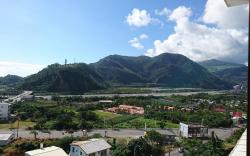
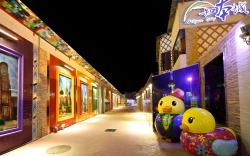
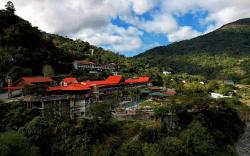
The Sapulju tribe is located in Xinxing Village, Jin feng Township, Taitung County. It is an East Paiwan indigenous tribe surrounded by mountains on three sides and the sea on one side, bordered to the south by the Da Wang tribe in Taimali Township, to the north by the Lubakatz tribe in Taimali Township, to the east by the Pacific Ocean, and to the west by Jinzhenshan. Facing the Pacific Ocean, the environment is serene. Formerly known as "Sa Pu Lu" (撒浦路), it was renamed "Lubakata" after Taiwan's recovery, and its Mandarin translation is "Xinxing Village." Before the 39th year of the Republic of China, the Sapulju tribe was within the territory of the Lubaka tribe in Taimali Township, designated as a hunting restricted area. The tribal people referred to this territory as Sapulju, which in the Paiwan language means "lonely, desolate land." The Sapulju tribe is composed of four major tribes and eight prominent families. The four major tribes are "Jiu Bin Mao tribe," "Bu Dun tribe," "Jin Huang tribe," and "Shi Ka Duo tribe." The Jiu Bin Mao tribe, located in the Southern Da Wu Mountain, consists of the "Ba Fa Fa Long family" and "Gu Sha Cha family." The Bu Dun tribe, located in the Northern Da Wu Mountain, is represented by the "Luo Fa Ni Yao family." The Jin Huang tribe, also in the Southern Da Wu Mountain, includes "De Lu Na Fu Na Fu Ke," "Gei Ni Lu Gu Yang," "Jiu Jia A Si family," and "Du Fei Long family," totaling four families. The Shi Ka Duo tribe has the "Shi Ka Duo family," together constituting the eight tribal chiefs of the Sapulju tribe. Starting from the entrance of Xinxing Elementary School, a series of paintings and stone slab art on the ground leads visitors into the world of indigenous culture. Whether it is the parking shelter, pathways, or restrooms, the doors and walls feature traditional Paiwan totem figures and other artworks, brimming with the essence of Paiwan traditional culture. In the traditional stone slab house of the village chief in Xinxing Village, one can appreciate the wood sculptures by folk artist Gan Bi, further deepening the understanding of the beauty of Paiwan traditional culture.