National Palace Museum Introduction
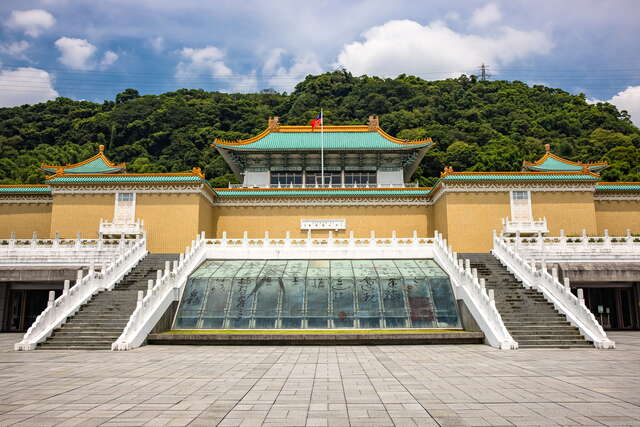
The National Palace Museum was established in 1965 in Shilin, featuring Chinese palace-style architecture. The first to third floors serve as exhibition spaces, while the fourth floor is a tea room called "Sanxitang." It houses the largest collection of Chinese art treasures in the world, primarily inherited from the Song, Yuan, Ming, and Qing dynasties, covering almost 5,000 years of Chinese history with nearly 700,000 items, earning it the title of "Cultural Treasure House of China." Within the museum, there are two categories of the "Three Treasures of the Palace Museum": the academic "Three Treasures," consisting of three monumental ink paintings from the Northern Song Dynasty, which are rarely exhibited, and the popular version featuring the Jadeite Cabbage, the Pork-shaped Stone, and the Mao Gong Ding. These treasures are named for their resemblance to the Chinese dish "suan cai bai rou guo" (sauerkraut and pork hot pot). The museum complex includes two gardens on either side: the Zhishan Garden on the left and the Zhide Garden on the right. Zhishan Garden, designed in the style of Song dynasty architecture, can be visited except on Mondays when it is closed. It features two ponds, three pavilions, and many fish and small animals, making it a perfect spot for families. Zhide Garden is located at the intersection of Zhishan Road and Palace Museum Road and is currently free to visit. Although not large, it has an elegant classical archway at its entrance and a lotus pond, which blooms with numerous lotus flowers in summer. For those who wish to avoid the crowds on weekends, the museum also offers online exhibitions, allowing visitors to preview various exhibitions, appreciate the beauty of the collections, experience interactive features that make you feel as if you've entered the artwork, and explore the museum in a 720° VR experience that simulates being inside the museum, with access to exhibition and collection descriptions anytime, anywhere, making you feel at home in the National Palace Museum. In addition to its rich exhibitions, the National Palace Museum provides professional guided tours and regularly hosts various cultural workshops, lectures, and traveling exhibitions, publishing over a hundred publications and albums, making it a cultural treasure of the world. The National Palace Museum is a must-visit destination when traveling to Taiwan. (Some information sources: National Palace Museum)