Xingquan Aqueduct Wind Chimes Wood Introduction
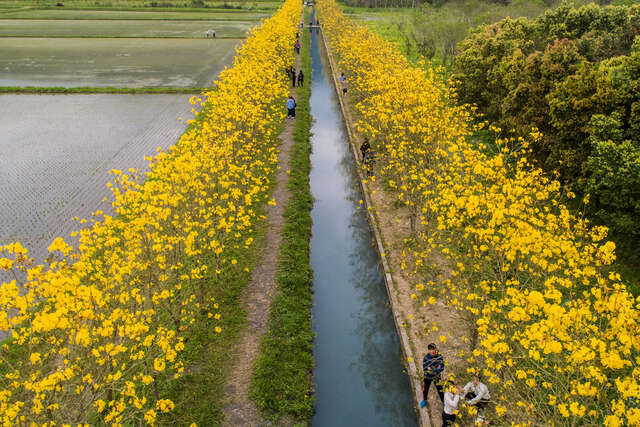
Every time the flowering season of the Tabebuia aurea (yellow flower bell tree) arrives, there is a frenzy to appreciate the flowers across various locations. Located at the junction of Guangfu and Ruisi, Xingquan Canal is a popular spot to admire the Tabebuia aurea. The nearly 300-meter long flower path flourishes in March with golden blossoms, complemented by the distant green mountains. Looking at the shimmering golden reflections in the flowing water of the canal is like viewing a beautiful oil painting, making it a trending check-in spot on Instagram and Facebook. The Xingquan Canal, which originates from the Fuyuan Butterfly Valley, was constructed during the Guangxu era of the Qing Dynasty and boasts a long history of over a hundred years. Subsequently, it was taken over by Taiwan Sugar Corporation, which planted bell trees on both sides of the canal. Every March, during the blooming season, this area transforms into a long golden river, with the blooming yellow flowers reflecting in the adjacent rice paddies, attracting many visitors to enjoy the flowers and immerse themselves in this beautiful scenery. Important reminder: Since the site is close to schools, please do not park vehicles recklessly or near schools (such as Fuyuan Junior High School), and help maintain smooth traffic! As the surroundings of the canal are primarily farmland and greenery, visitors must walk on the ridges of the fields to admire the flowers. Care should be taken to avoid slipping, and it is recommended to wear non-slip shoes or waterproof shoes that are okay to get dirty, as they can be washed off afterward. In addition to being cautious not to fall into the canal, please ensure that no litter is left behind to maintain environmental cleanliness.