Lukang Wenwu Temple Introduction
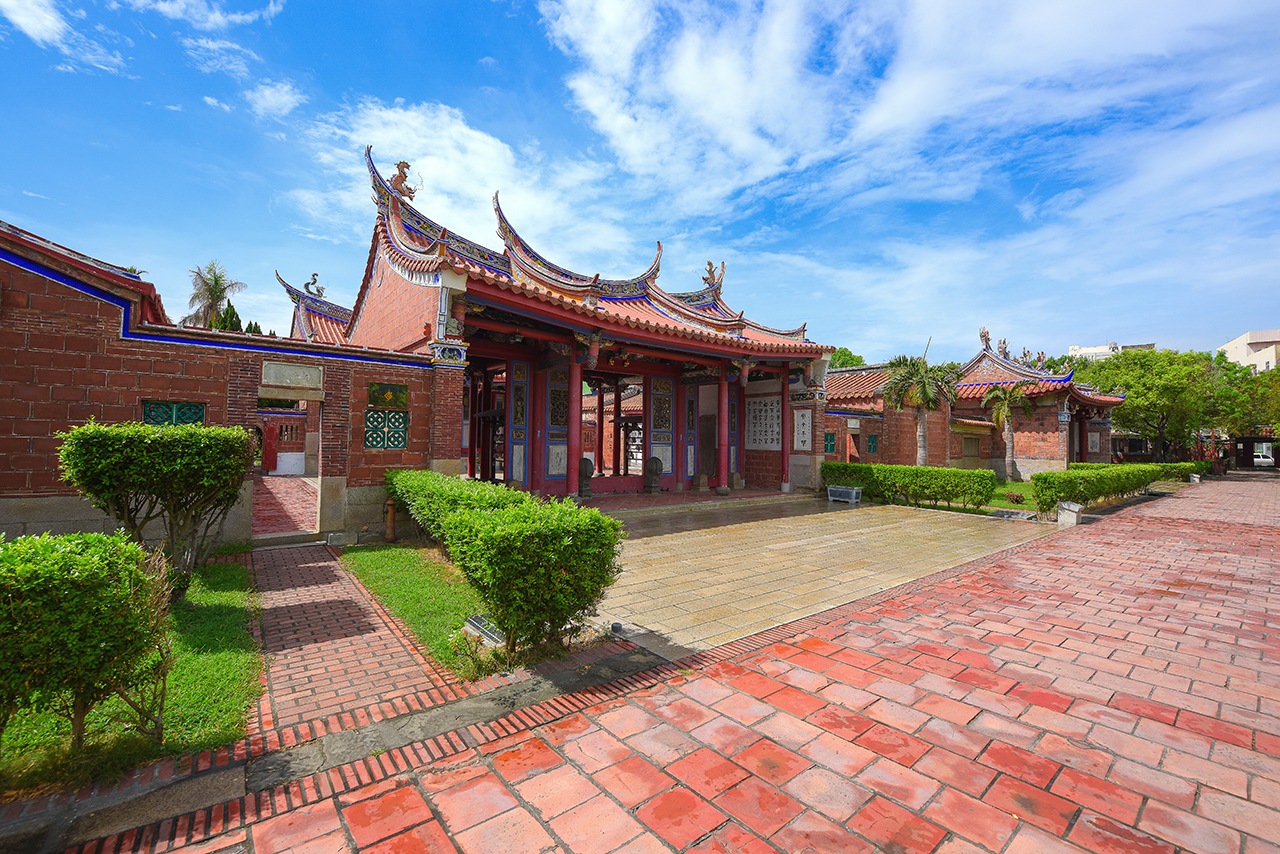
Wenkai Academy, the Wumiao Temple, and the Wenchang Shrine are three adjacent buildings lined up in a row. In the 4th year of the Daoguang era (1824), Deng Chuan'an, the coastal defense officer of Lugang, proposed the establishment of the academy, which was funded by local merchants and gentry from Quanzhou and Xiamen. The construction of the academy was completed in the 7th year of Daoguang (1827). Named "Wenkai Academy," it commemorates the Ming dynasty Confucian scholar Shen Guangwen, whose courtesy name was "Wenkai."
 Wenchang Temple is dedicated to Wenchang Dijun, while the Martial Temple is dedicated to Guan Sheng Dijun. The literati of Lukang once established the "Ba Society" within Wenchang Temple, which was an early academy and poetry society in Lukang, giving rise to Wenchang Temple's significance.
After World War II, Wenchang Temple and the Martial Temple became military barracks. In 1975, Wenchang Temple suffered damage from a disaster, and in 1985 it was restored by the government to its original form. The 921 earthquake in 1999 caused further damage to Wenkai Academy and Wenchang Temple, leading to another restoration in 2002, which was completed in 2005.
Wenchang Temple is a two-section building with a courtyard, and there is a pond in front known as the Pan Pond. In ancient times, candidates would worship at Wenchang Temple before taking exams, following ancient customs to pluck celery leaves by the Pan Pond and insert them into their hats. Those who passed the exams were thus referred to as "entering the Pan."
Wenchang Temple is dedicated to Wenchang Dijun, while the Martial Temple is dedicated to Guan Sheng Dijun. The literati of Lukang once established the "Ba Society" within Wenchang Temple, which was an early academy and poetry society in Lukang, giving rise to Wenchang Temple's significance.
After World War II, Wenchang Temple and the Martial Temple became military barracks. In 1975, Wenchang Temple suffered damage from a disaster, and in 1985 it was restored by the government to its original form. The 921 earthquake in 1999 caused further damage to Wenkai Academy and Wenchang Temple, leading to another restoration in 2002, which was completed in 2005.
Wenchang Temple is a two-section building with a courtyard, and there is a pond in front known as the Pan Pond. In ancient times, candidates would worship at Wenchang Temple before taking exams, following ancient customs to pluck celery leaves by the Pan Pond and insert them into their hats. Those who passed the exams were thus referred to as "entering the Pan."
 Inside the San Chuan Temple, there are two inscriptions, namely the "Stele of the Reconstruction of the Wenwu Temples" from the 24th year of the Jiaqing era (1819) and the "Stele of the Reconstruction of the Wen Temple" from the 8th year of the Guangxu era (1869), which are important documents for the Wenchang Temple and the Wumiao. Between the Wen Temple and the Wumiao, there is a well known as "Tiger Well," whose water quality is sweet and thus is referred to as the "First Spring of Penglai."