Xinwu Shihhu Story House Introduction
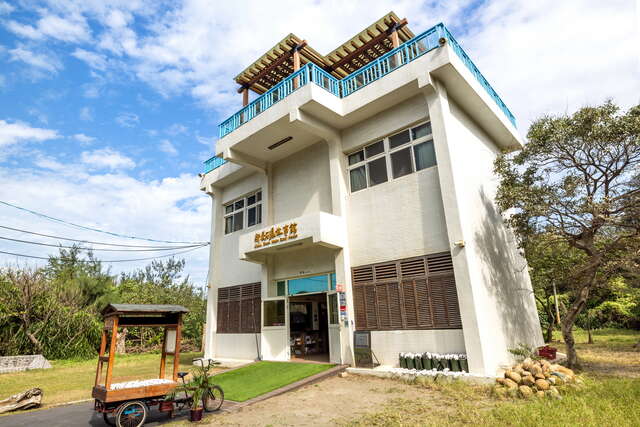
The old outpost has transformed into a new highlight hidden within the oyster farming windbreak forest in Xinyu. Originally built in 1990 as a police dormitory and outpost, this structure, which once served to safeguard coastal defenses, was revitalized by the city government and in 2020 became a landmark that combines culture, education, and tourism—the Xinyu Shihhu Story Museum, breathing new life into this once-forgotten corner. A comprehensive experience of fishing culture can be found on the first floor in the fishing culture tour area, where visitors feel as though they have entered a three-dimensional history book of fishing villages. The museum displays models of stone traps along with illustrated texts and audio-visual materials, fully presenting the development trajectory of Xinyu’s stone traps. Did you know? Xinyu currently retains the best-preserved stone traps in Taiwan, with the No. 9 stone trap in O-jian being a giant, measuring an impressive 362 meters long, showcasing the craftsmanship and unity of our ancestors. Don't rush to leave; the second floor's "Sea Creator Classroom" offers another fascinating experience! Here, marine waste recycling and environmental education are integrated, providing DIY recycling craft experiences that teach both young and old to cherish the ocean through play. This extends from traditional fishing culture to modern marine sustainability, seamlessly connecting knowledge and action. Climb up to the observation area on the third floor to enjoy a panoramic view of the endless blue coastline. Sitting at the viewing platform with a cup of coffee, one can quietly listen to the melodies of waves and sea breezes, instantly forgetting the hustle and bustle. Want a deeper taste of local flavors? Don’t forget to pre-book the traditional seafood dish "Salty Rice of the Fishermen" to experience the everyday taste of the fishing community. The history of the Xinyu stone traps can be traced back to the Qing Dynasty. Early Han Chinese immigrants used local pebbles to build hundreds of meters of stone traps by hand, which not only served fishing purposes but also became a symbol of collaboration among people. Currently, there are 11 retained stone traps from the northern shore of Shenzhen to O-jian, with the No. 3 stone trap in O-jian having once caught 600 kilograms of fish and still being functional for fishing today. The story museum also schedules stone trap tours daily according to tidal times, guiding visitors to witness the magnificent traces of a century-old wisdom. This is not just a journey, but a profound dialogue between culture and nature.